
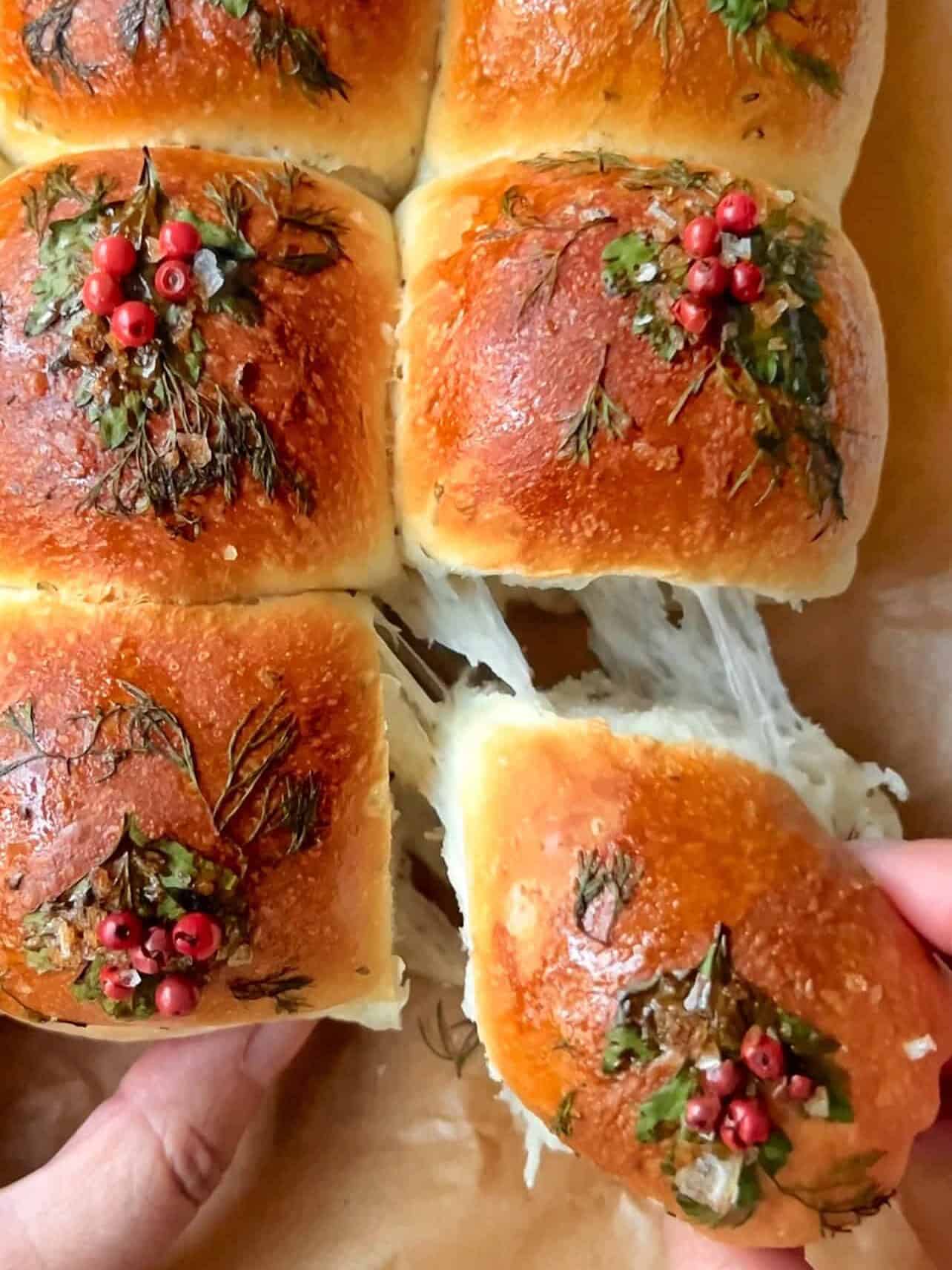
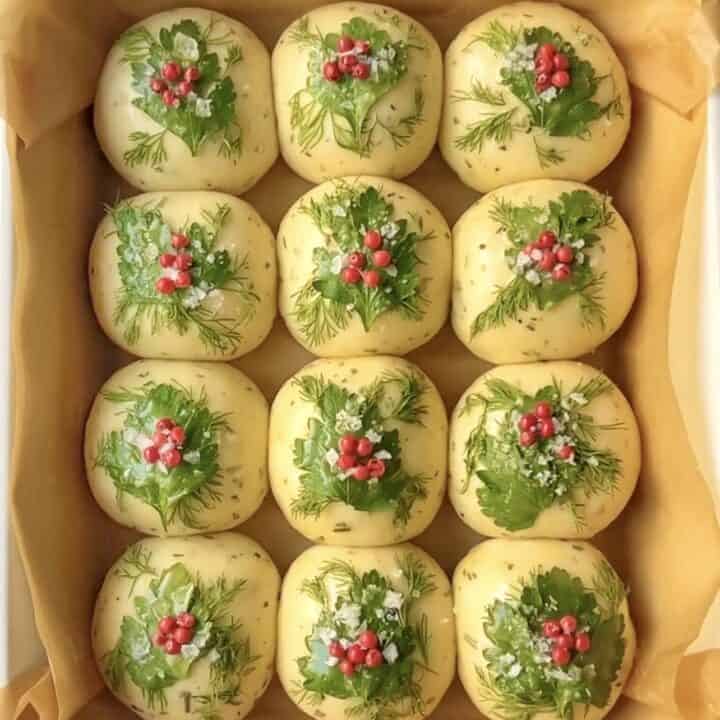
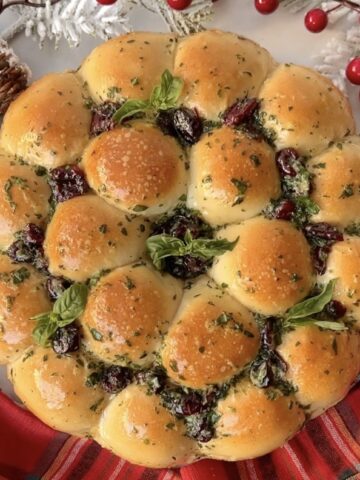
No one realizes they need Festive Holiday Dinner Rolls until they see this. Tempting? These soft, fluffy, brioche-like rolls made with a touch of rosemary and honey are exactly what you need to elevate your party spread! So let's talk about the decorations - how stinking cute are they, right? With the help of pink peppercorns and a few fresh herbs, you too can add that holiday sparkle to any dinner rolls recipe.

The decorations are fresh dill, flat-leaf parsley, red peppercorns, and flaky sea salt brushed on with a quick and easy sweet honey butter. It just adds that extra holiday sparkle, doesn't it?! The best part - you can decorate any dinner rolls just like this. Now that's not to say this homemade rosemary dinner rolls recipe is worth skipping. I'll be honest - the decorations are more for aesthetics and the 'gram than flavor. But the bread - soft, fluffy, airy, and baked perfectly golden? These dinner rolls belong right next to your turkey to soak up all that gravy.
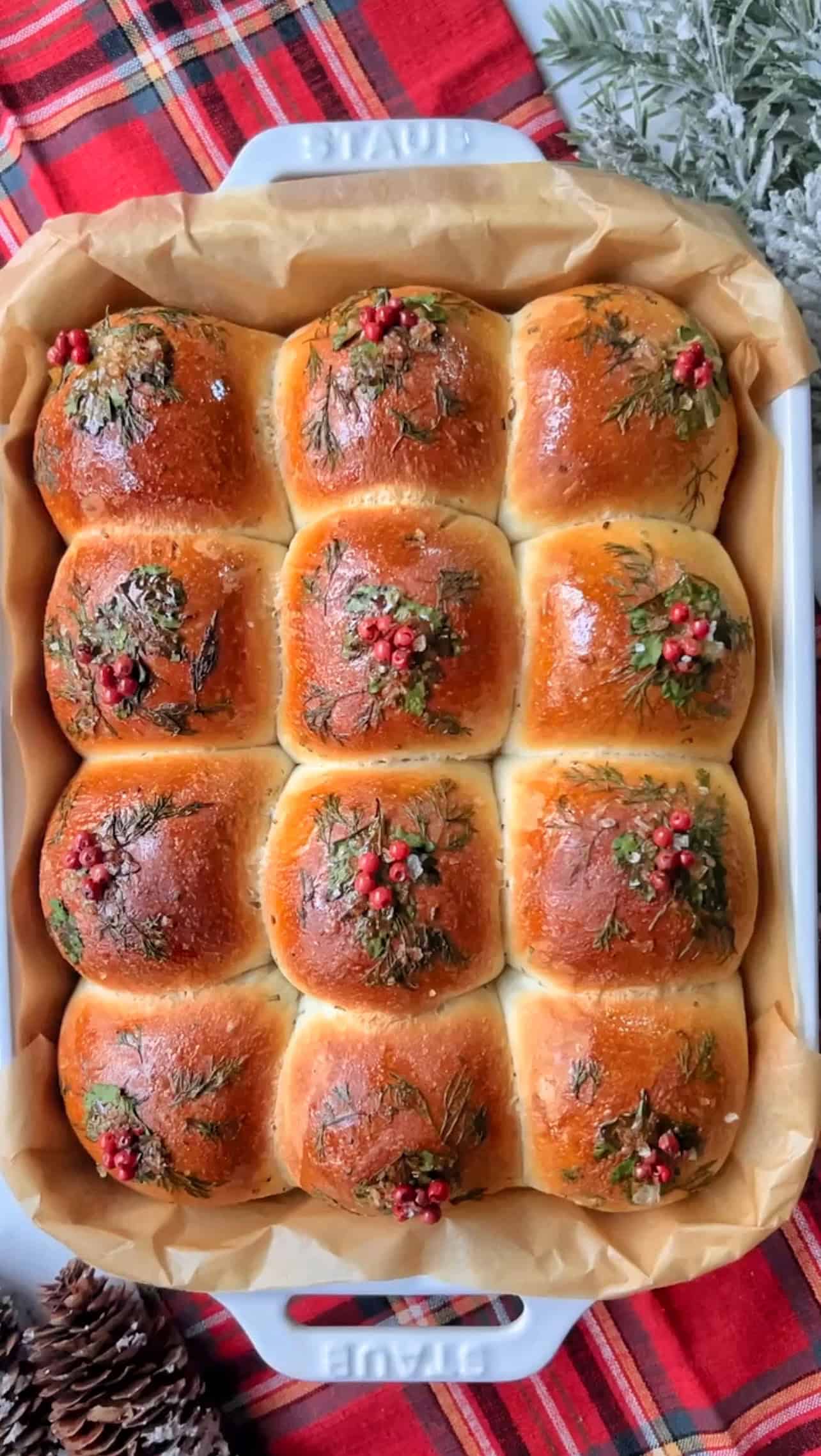
Lily Morello @lilbubbletea shared a photo last year with this dinner roll decoration and I was stunned how beautiful hers came out! I adapted her recipe slightly to fit my tastes (and my favorite Staub pan) and I can't wait for you guys to try it! Everyone will be so impressed - it's sure to be a big hit this holiday season.

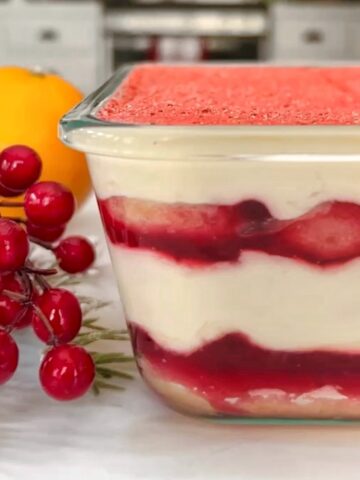
Looking for an easy holiday appetizer? My Blackberry Goat Cheese Crostini platter is always a hit and ready in 15 minutes. Need a holiday dessert? Make my No-Bake Cranberry Tiramisu for your friends will be shooketh.
If you love to make homemade bread and looking for the ULTIMATE Christmas showstopper, be sure to check out my Cheesy Pull-Apart Christmas Tree Bread or Cheese-Stuffed Garlic Christmas Wreath for your next holiday party - recipe coming soon!
Jump to:
Why You Will Love These Festive Holiday Dinner Rolls
Dinner rolls are a given at your holiday meal - yes or no? If they are, why not make them festive?! These ultra-soft fluffy rosemary honey rolls follow the tangzhong method, so trust me - they are absolutely worth it. But if you would rather decorate your favorite ready-to-bake store rolls as a shortcut, simply head to the honey butter steps and follow along. Any way you make your festive holiday dinner rolls will be absolutely delicious!

Tangzhong Method
What if I told you adding one extra quick step can make homemade bread softer, fluffier, and extend its shelf life? If you haven't heard of the tangzhong method, let me quickly explain and you will see how easy it is and why you should use it, too.
If you come across a bread recipe that includes this tangzhong method, this is what they did. They combined a small portion of the flour, plus a portion of the liquid into a saucepan and cooked it until it turned into a paste(also referred to as "water roux"). They take this paste and simply added it back into the recipe. Got it? We "pre-cook" a portion of the flour and liquid to form a paste, then add it back with the rest of the dough ingredients.
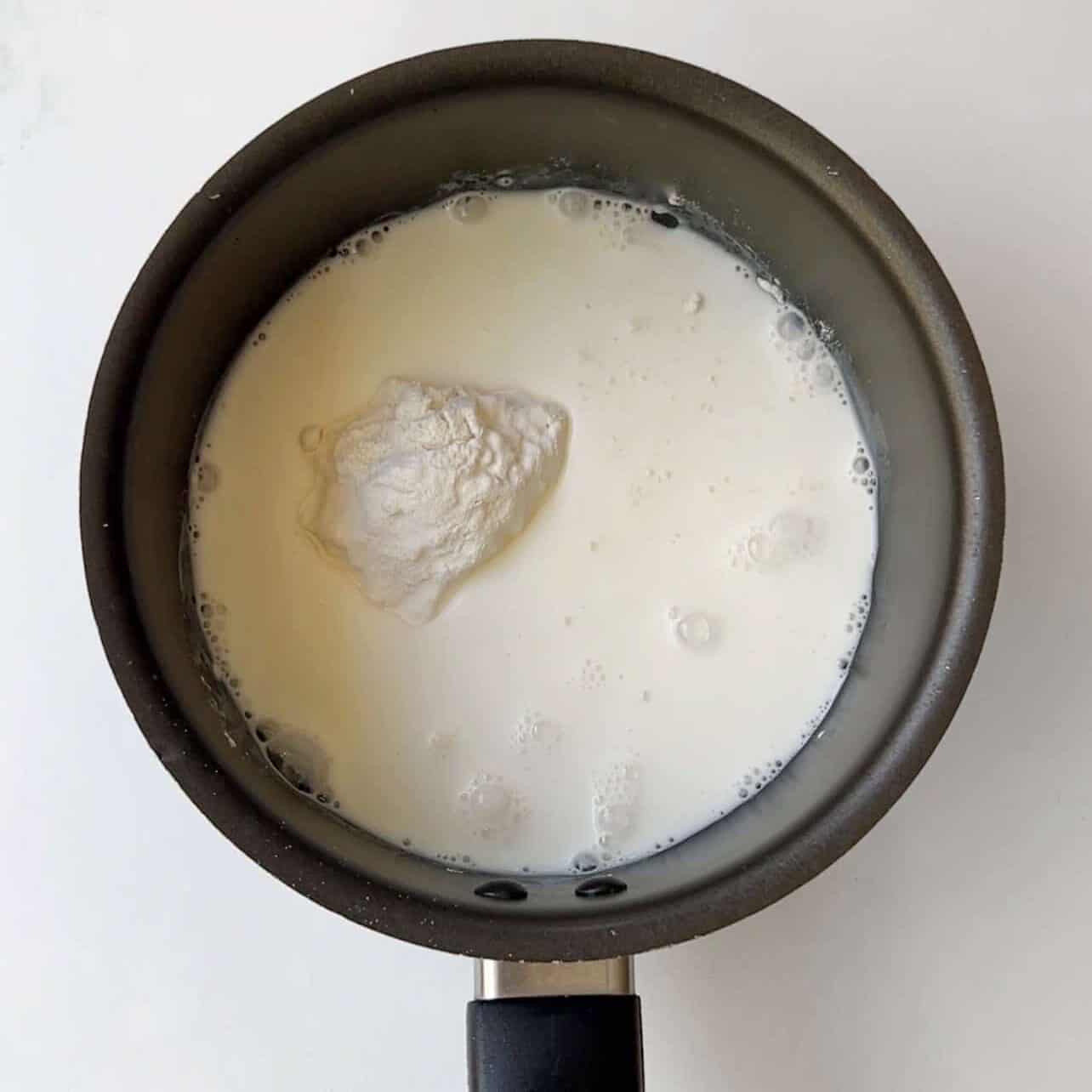
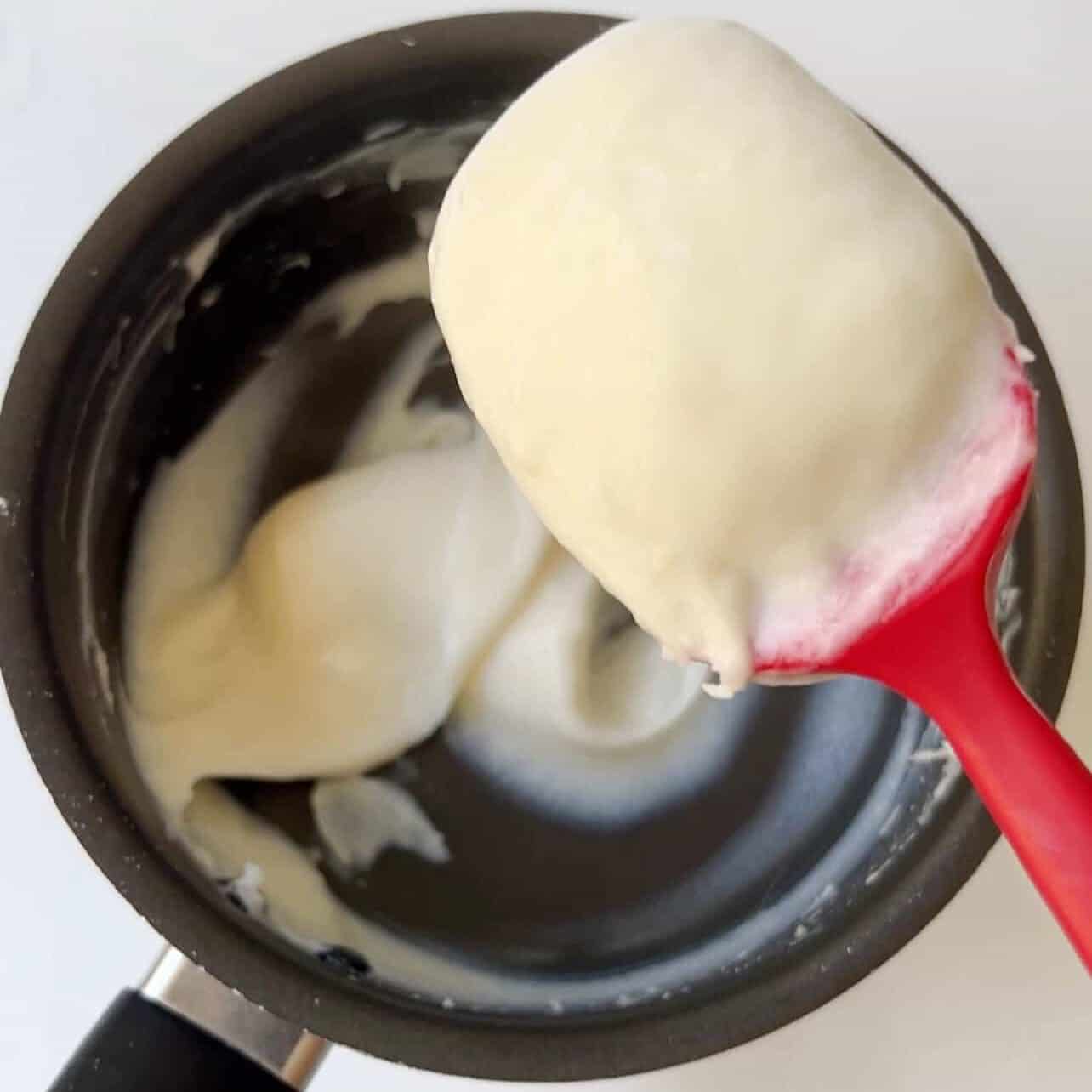
What does this do? By cooking it, it gelatinizes the starches present in the flour, and that allows the flour to soak in and retain almost double the moisture! More moisture = fluffier tender bread that stays fresh much longer.
Not all breads benefit from using this tangzhong method. It's mainly used in softer breads such as cinnamon rolls, milk breads, dinner rolls, challah, brioche, babka - basically ones that's enriched with eggs, butter, or other fats.
So now you know what the Tangzhong method means! You can read this recipe card and understand why we're using it. Does it truly make a difference? Absolutely. These Festive Holiday Dinner Rolls made with this method will stay fresher longer, and their crumbs are taller and softer compared to the ones made without it.
Key Notes About A Few Ingredients
- Yeast: I prefer using instant, but active dry yeast works as well - just be sure to bloom it.
- Milk: Enhances dough in so many ways versus using water. Milk makes dough softer, adds subtle sweetness and flavor, caramelizes for a more golden crust, helps build with a more uniformed bread crumb, and contributes to a longer shelf life.
- Bread flour: We want to use a high protein bread flour. If all you have is all-purpose flour, you can definitely use it. The bread structure may not rise as well and texture may be less chewy.
- Honey: Adds sweetness, flavor, and helps to activate the yeast. You can also substitute with granulated sugar.
- Salt: I prefer using kosher salt for most baked goods. Reduce amount if using salted butter.
- Egg: Enriches the dough with more fat and helps inhibit gluten for a more tender crumb and soft crust.
- Butter: Unsalted and room temperature. It's always safe practice to use unsalted butter for bread making so you can control how much salt is added. If you do use salted butter, adjust or reduce the salt measurement.
- Rosemary: Fresh rosemary, chopped. If you are using dried rosemary, reduce it to 1-1½ tsp.
- Dill/flat-leaf parsley/pink peppercorn/ flaky sea salt: The decorations that make these so festive and fun!
How To Make Festive Holiday Dinner Rolls
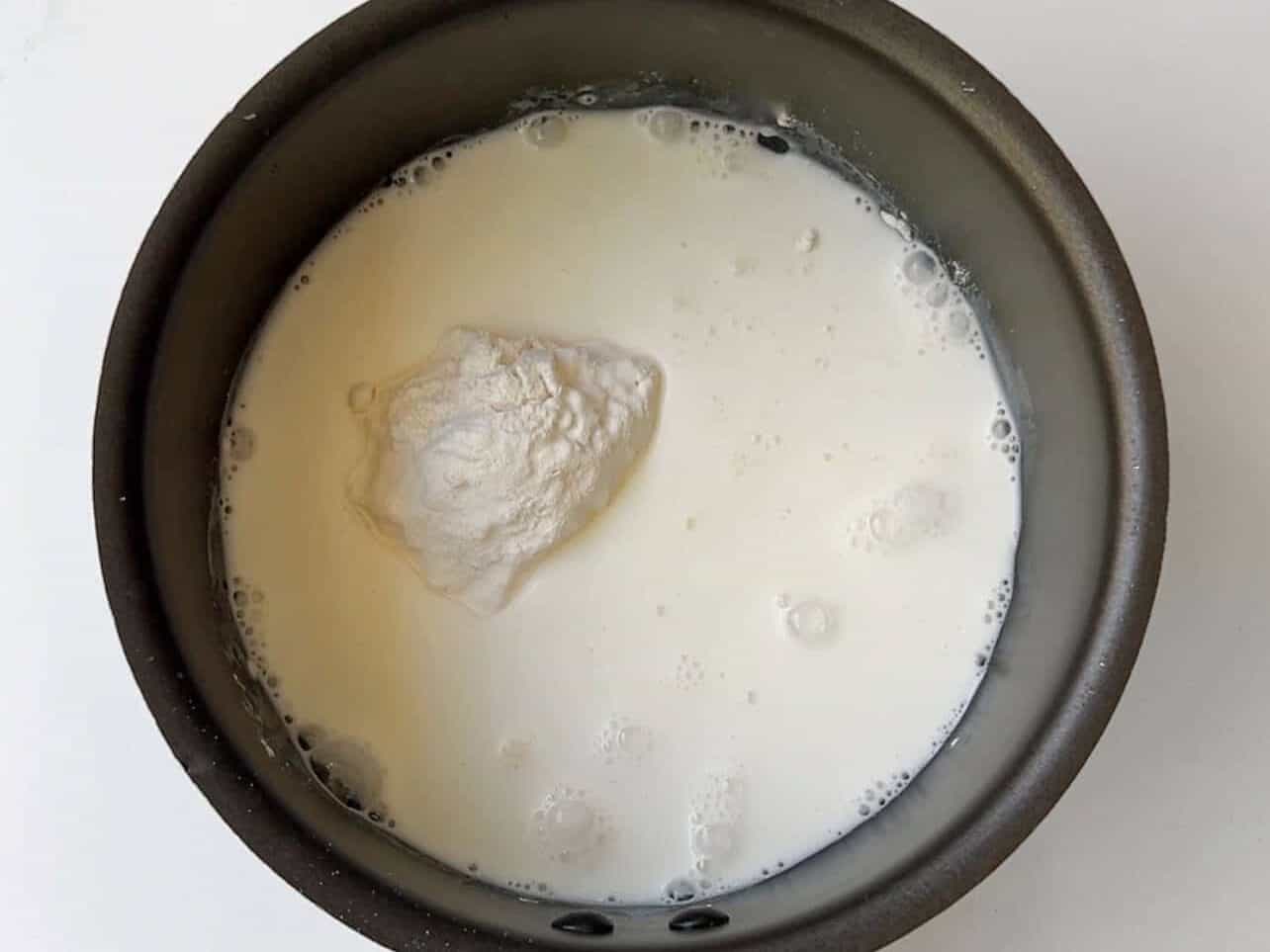
To make your tangzhong, combine flour and milk in small saucepan, and stir until lump-free.
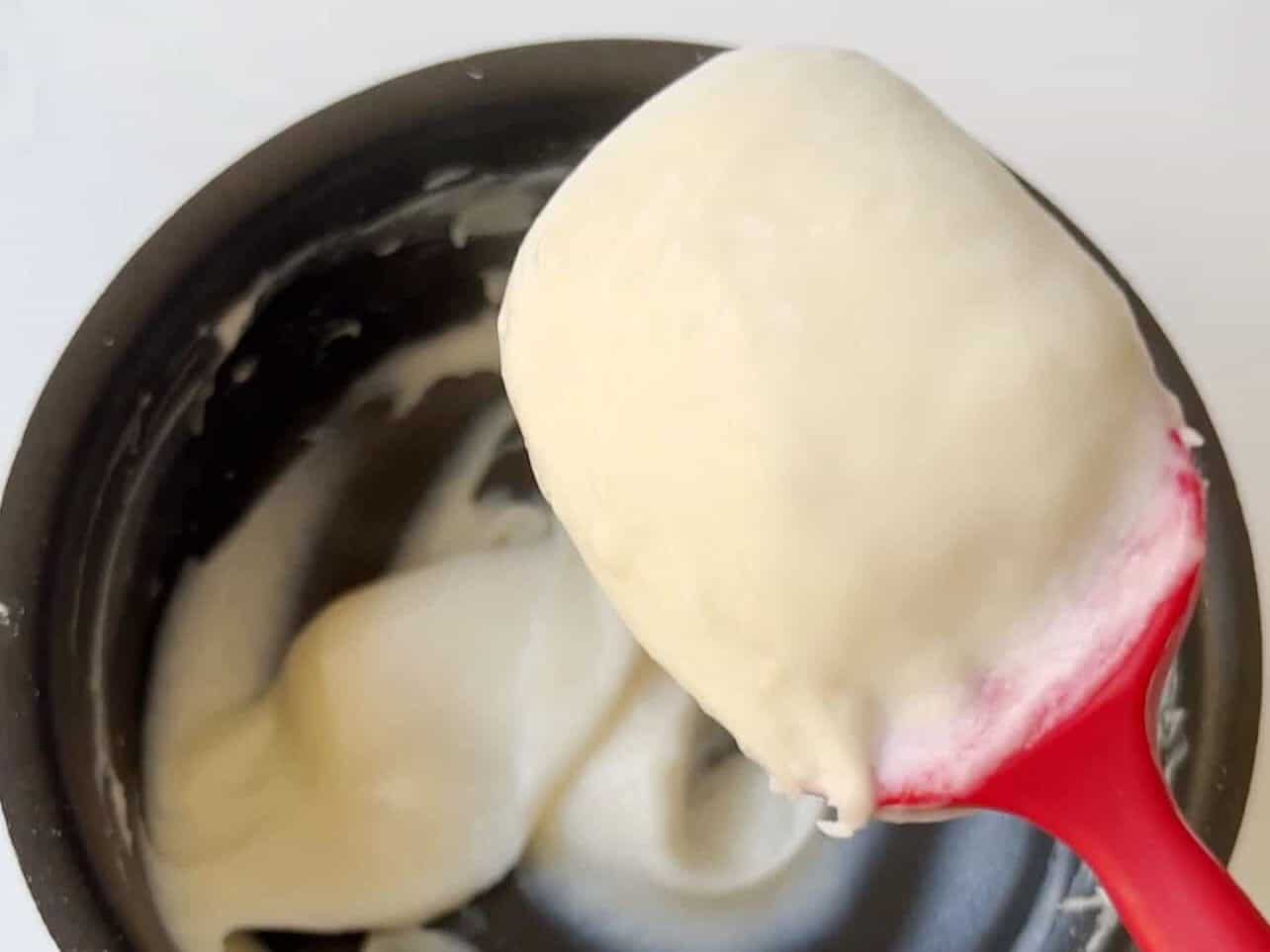
Cook on med-low until it turns into a paste. This paste helps retain moisture for fluffier softer bread that stays fresh longer. Allow to cool to room temp.
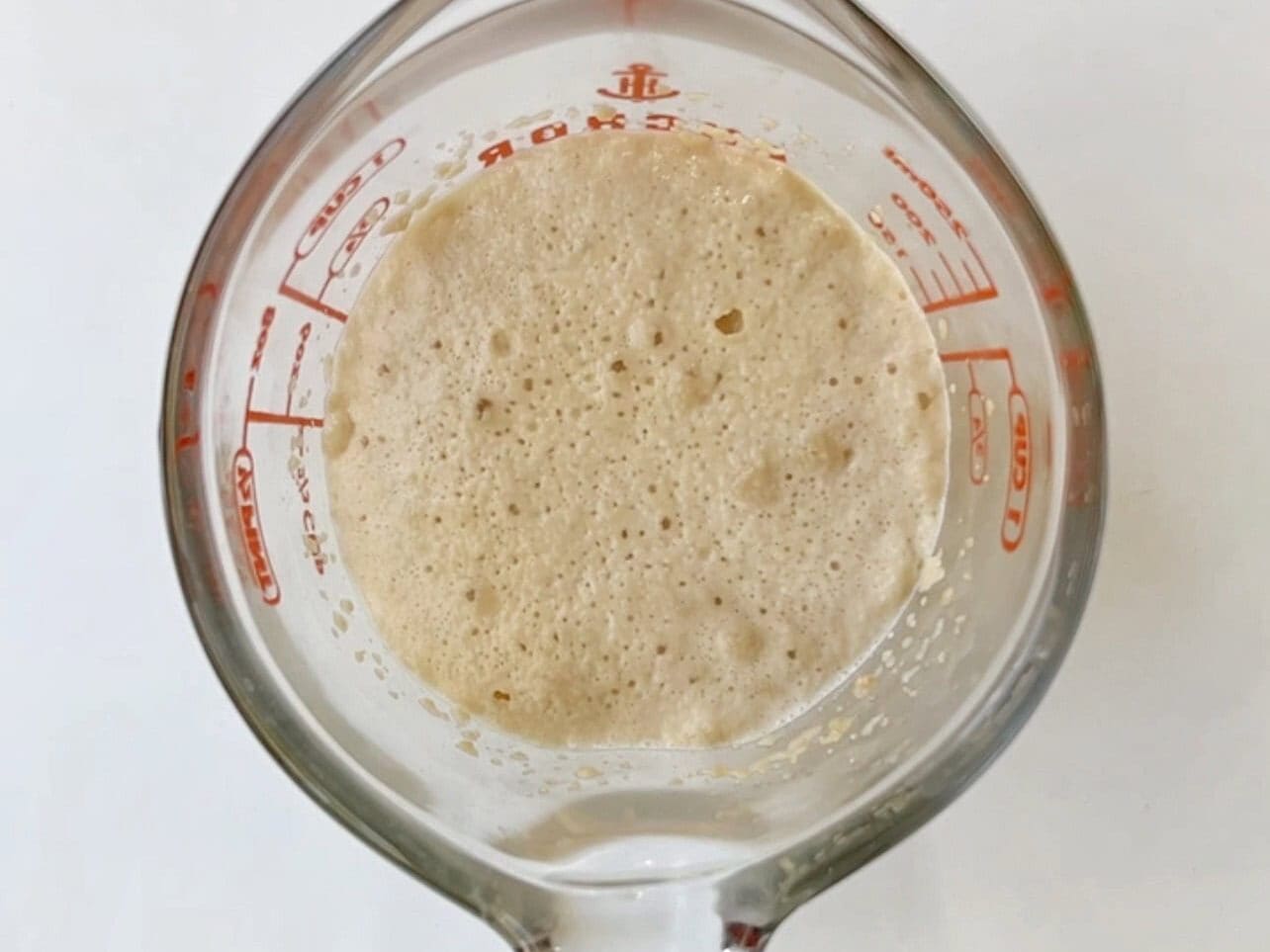
If using active dry yeast, be sure to bloom it first in warm milk until it bubbles and foams. If using instant dry yeast, you can skip this step.
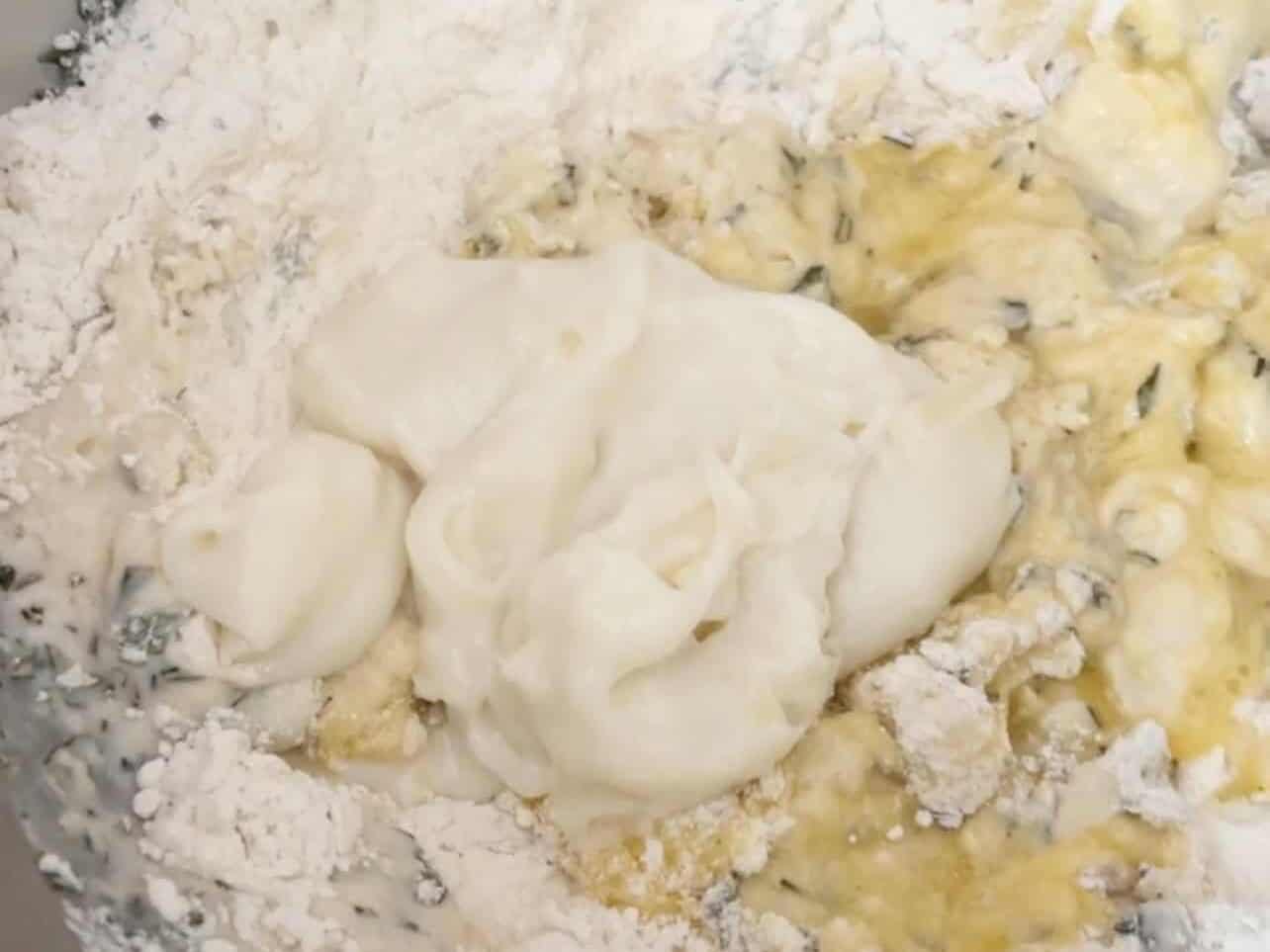
Add paste into mixing bowl with all other dough ingredients. Mix until all dry flour has been absorbed.
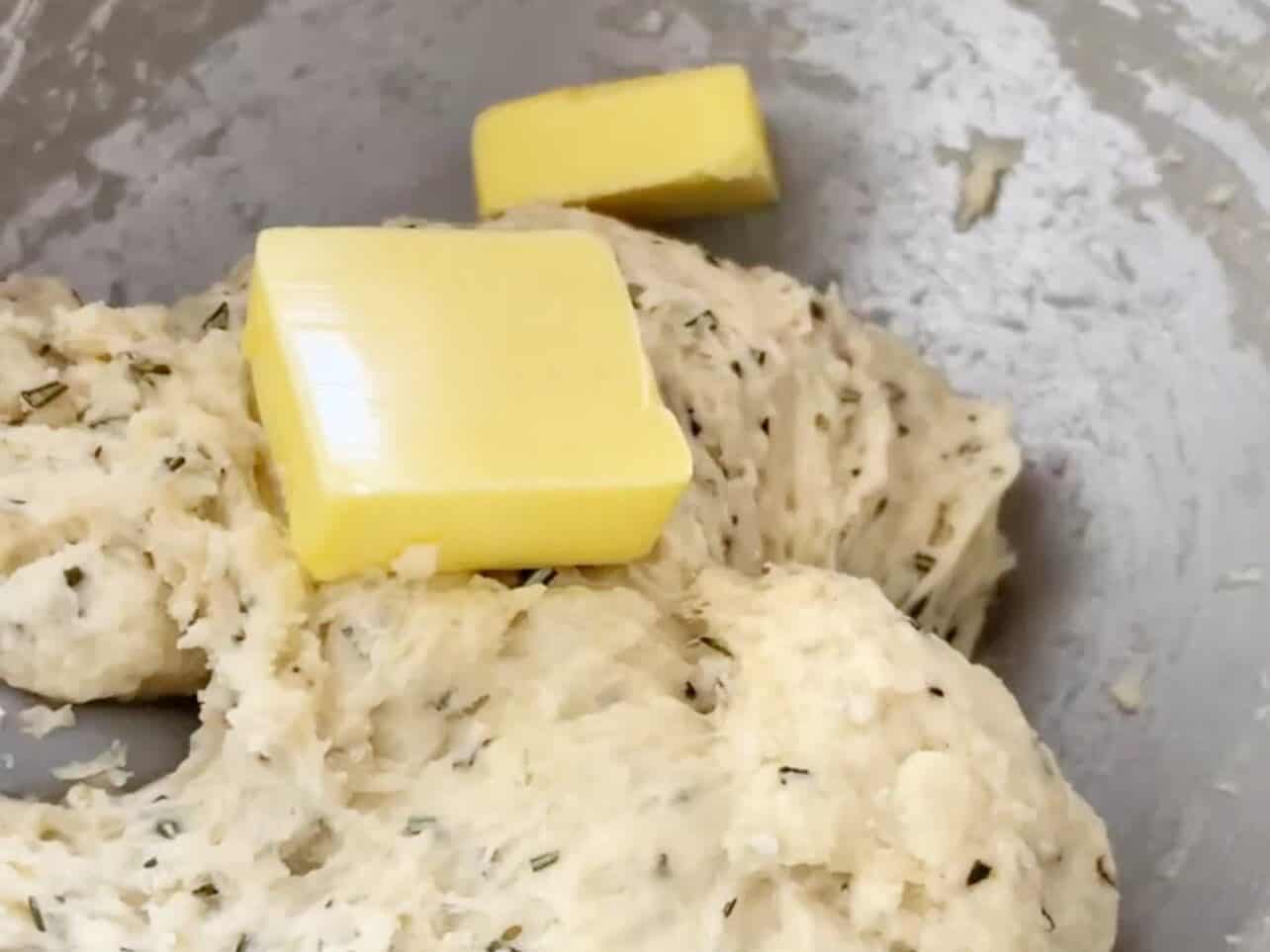
Add softened butter and continue to knead for 10-15 mins.
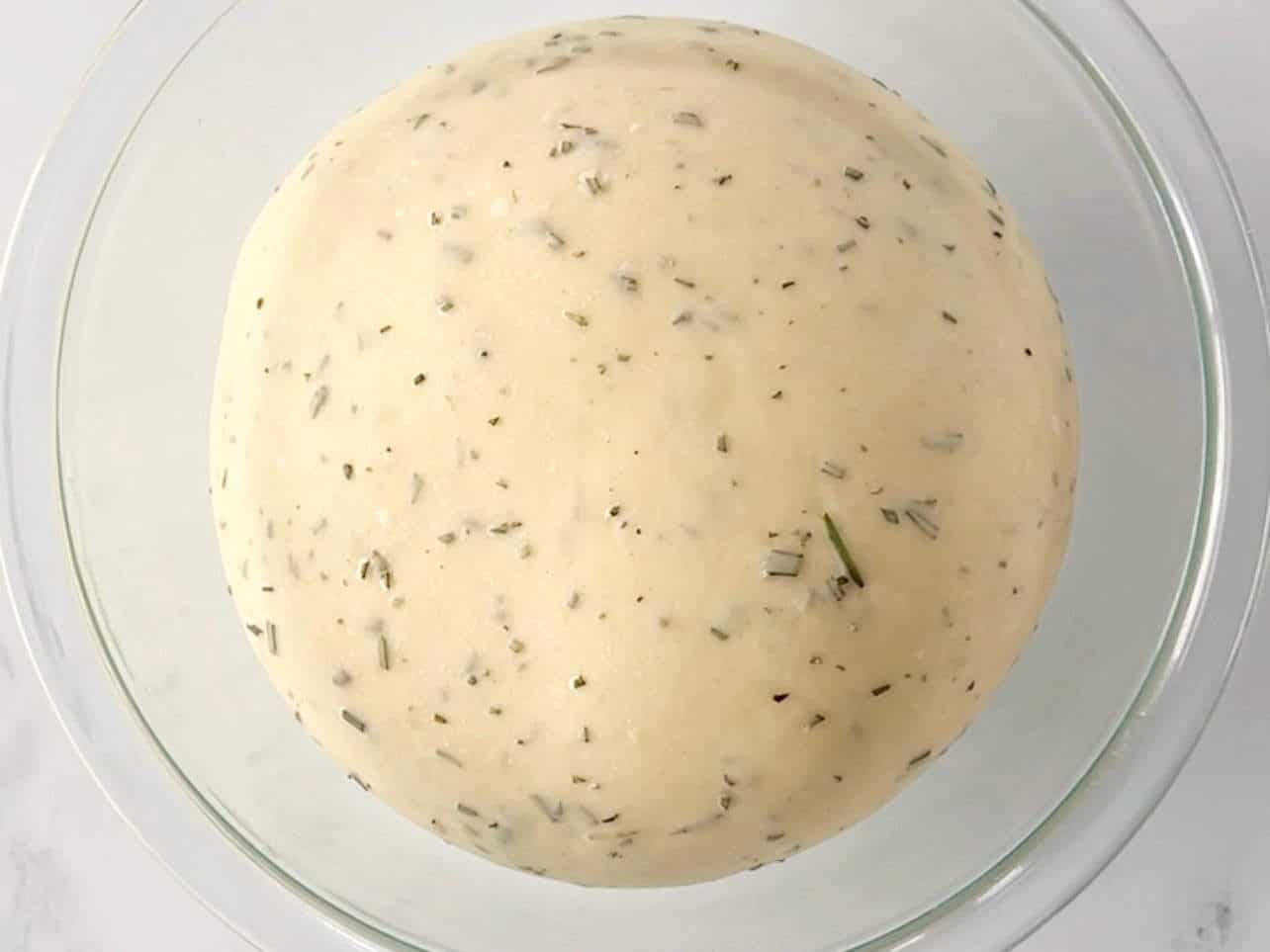
Cover dough and allow to rise until doubled in size.
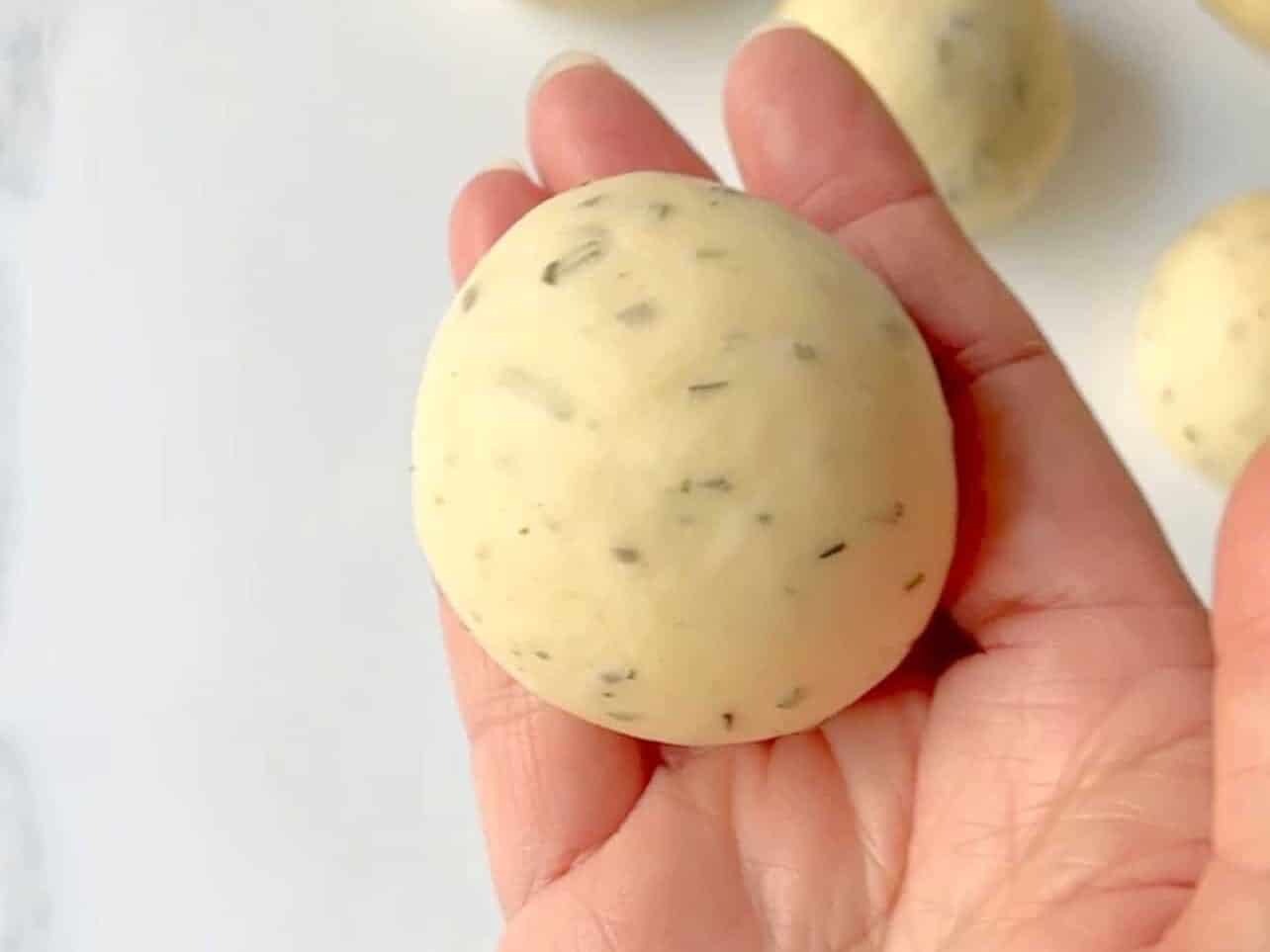
Roll dough into 12 dough balls, approx 52-56g each.
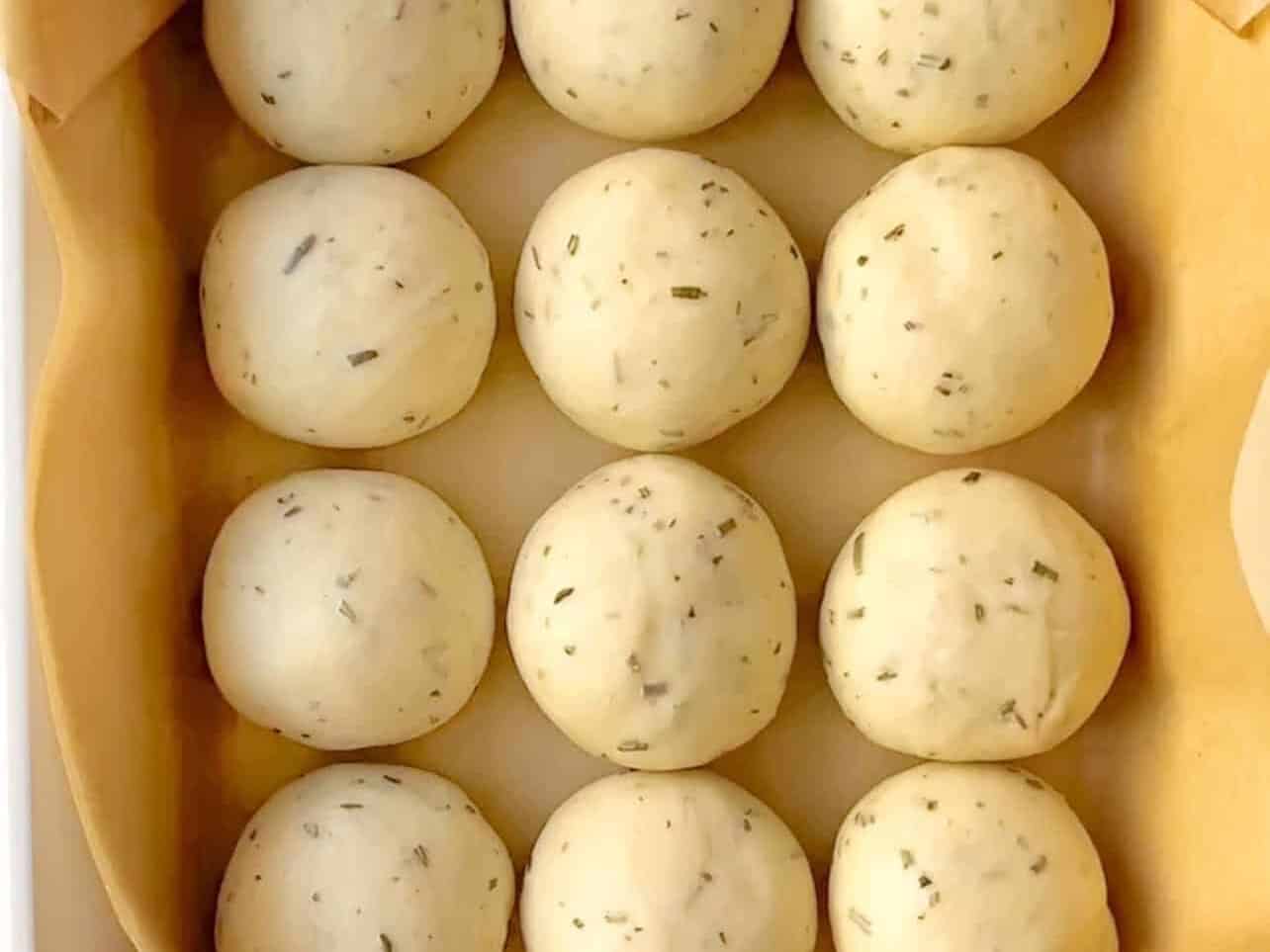
Preheat oven as dough proofs covered in an7x11inch lined pan or similar.
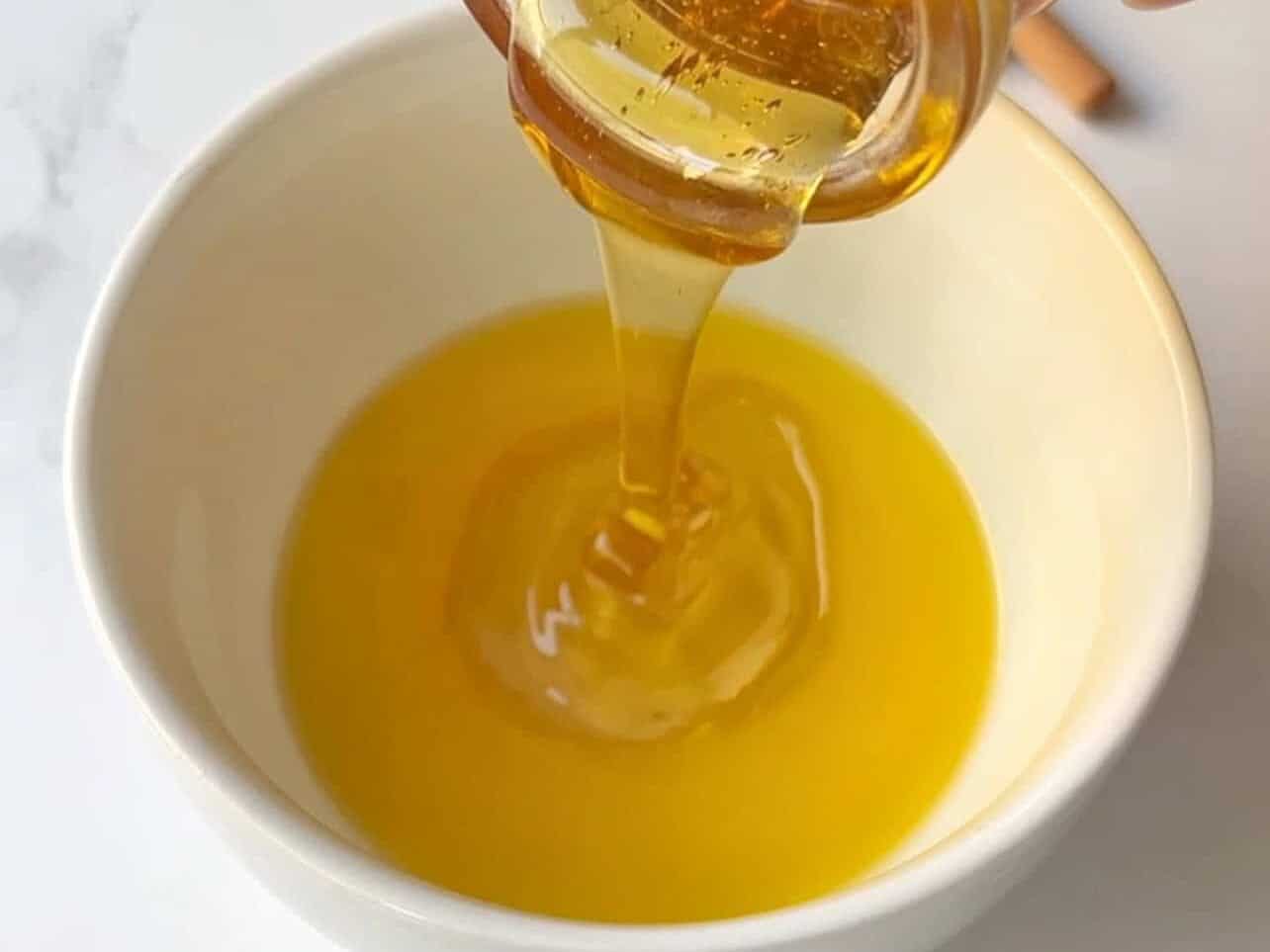
To make honey butter, combine honey with melted butter in a small mixing bowl.
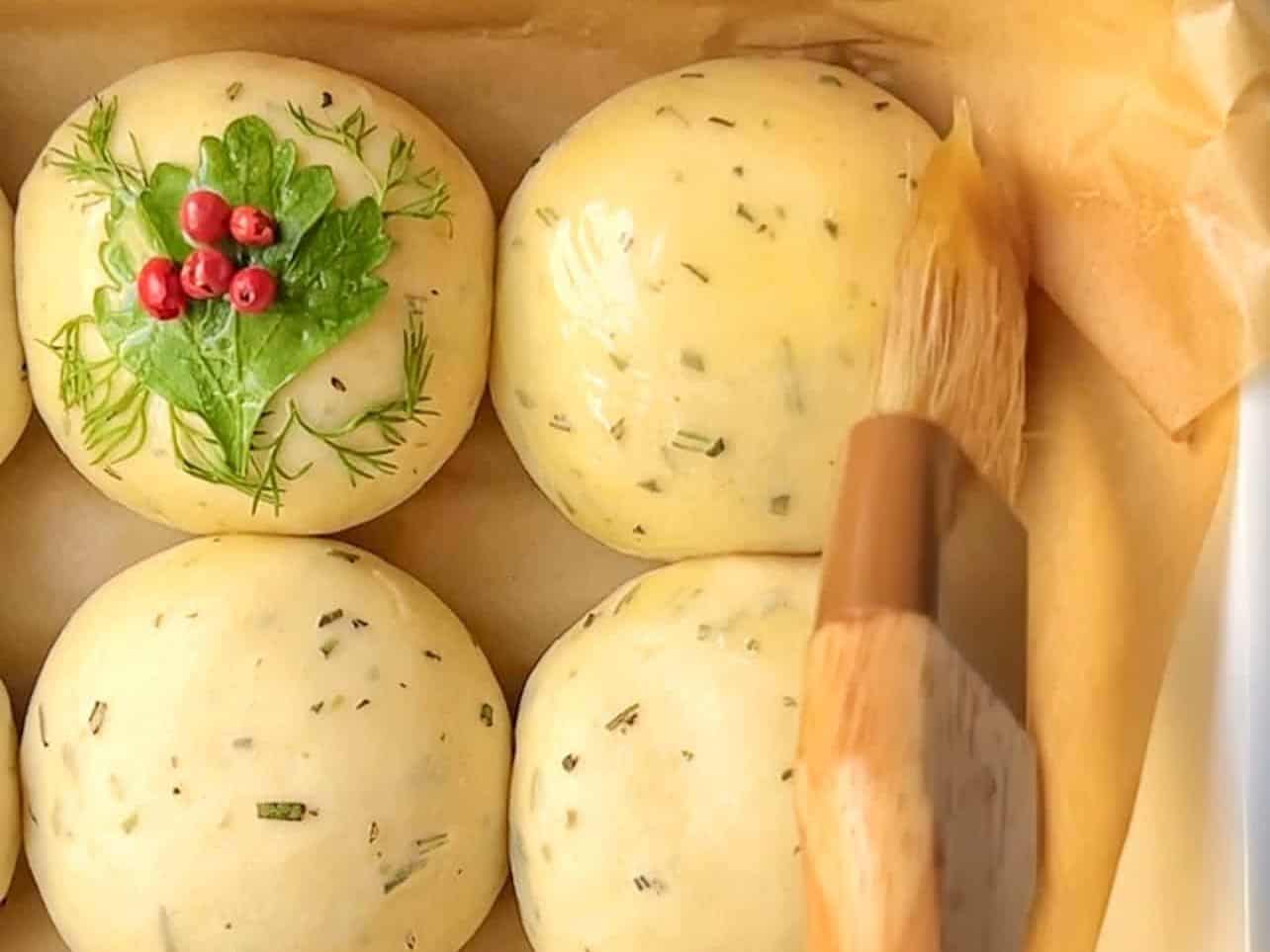
Honey butter will act as the "glue" for the decorations.
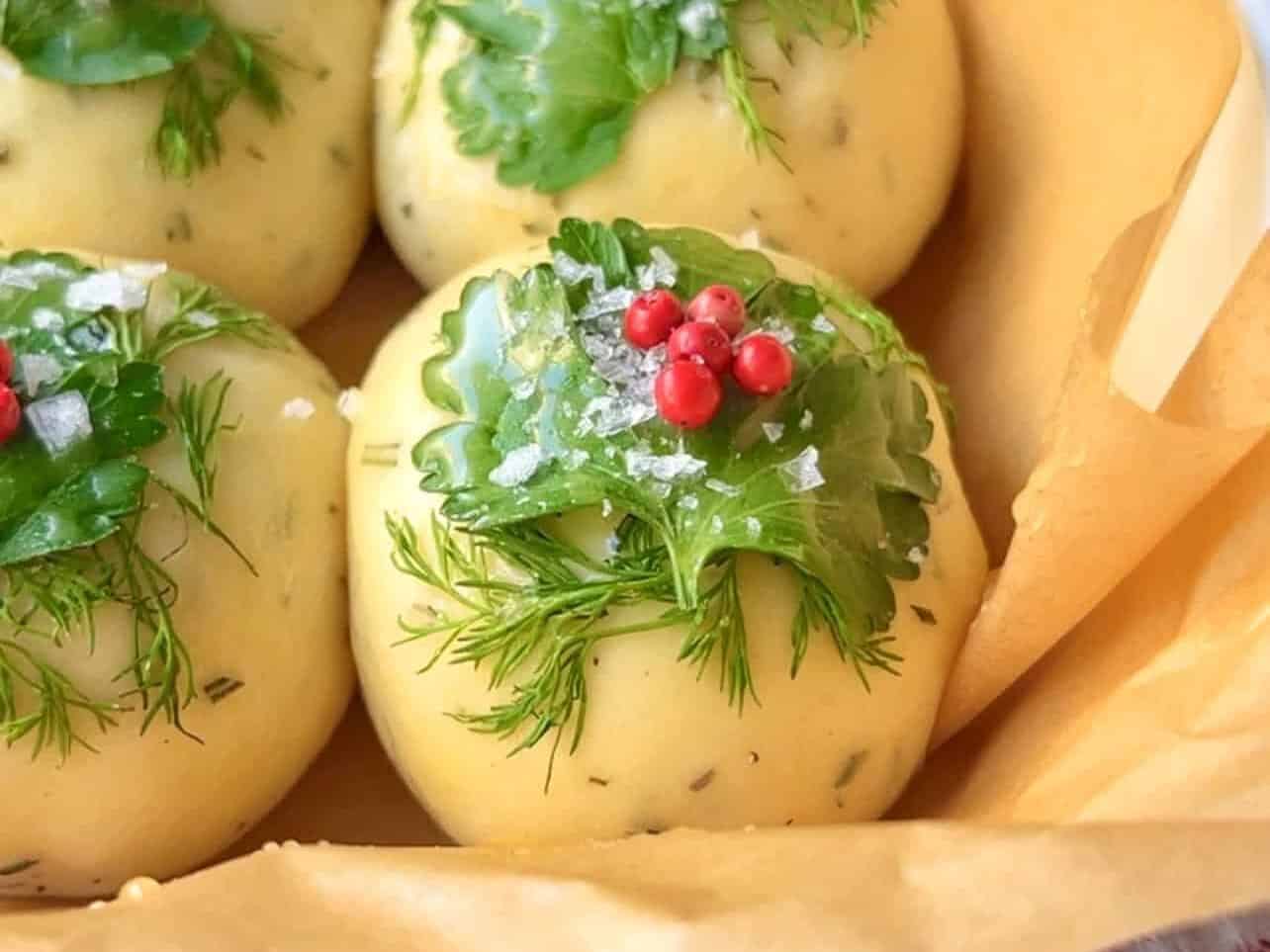
Gently lay down dill, parsley, peppercorns, then flaky sea salt.
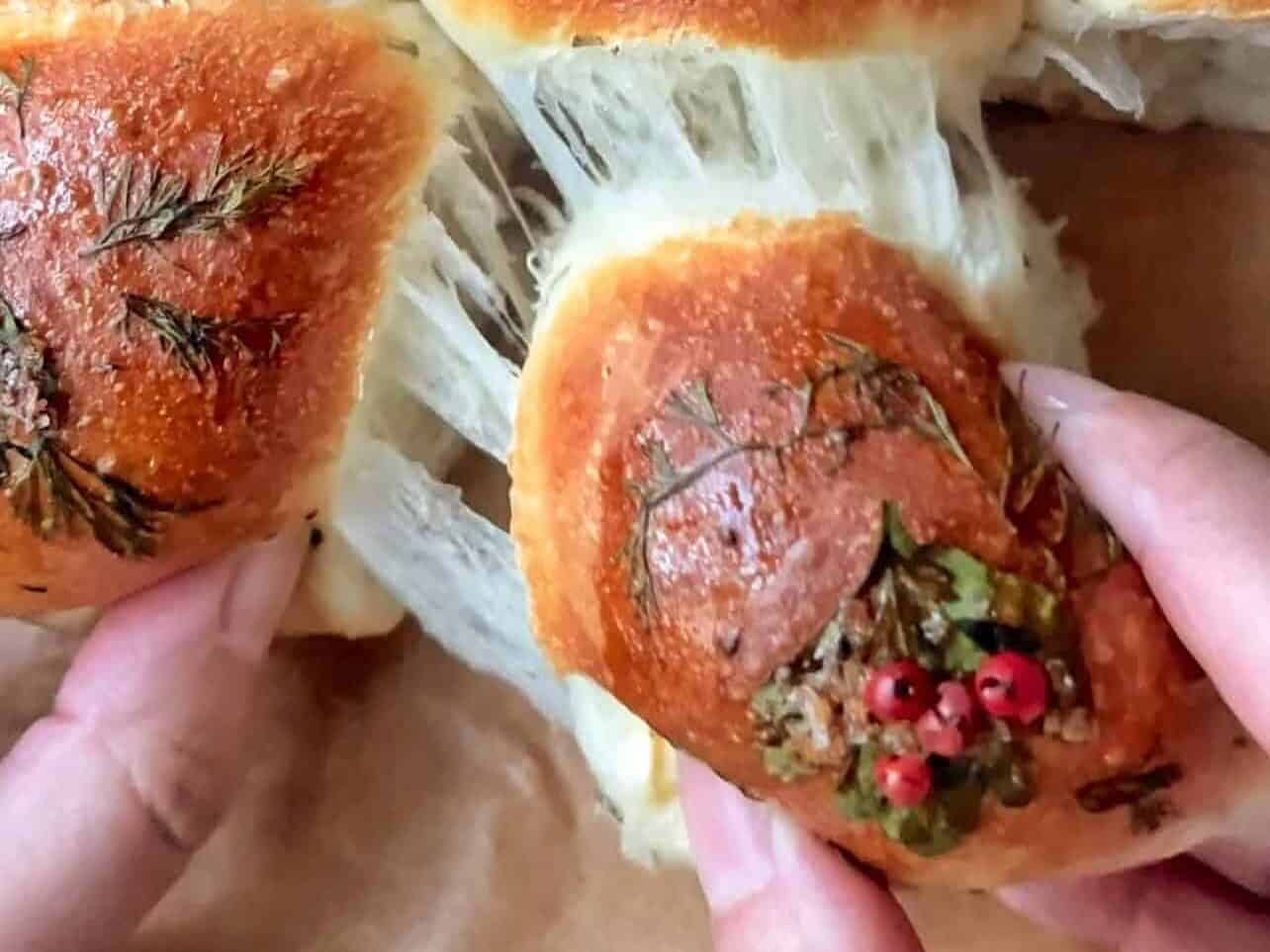
Bake until golden brown, cool slightly, and serve warm.
Suzy's Tips For Success
Visual cues > recipe times: Many of the tips below will teach you to trust proven visual cues than sticking to what's written in recipes. I get it, we all love following what the recipes say to the tee - I'm the same way! Here's the thing we need to consider: temperature. Your kitchen may be cooler or warmer than mine, and that is a big determining factor on how our dough reacts. If your kitchen is warmer, things will happen faster. If it's cooler, don't be surprised if your dough hasn't doubled when your timer goes off. So if you learn to look for visual cues rather than sticking to the recipe, you will learn how to reach to any dough.
Measure your flour and ingredients accurately: For best results, use a kitchen scale. They will give you the reassurance you need that you have the right amount of ingredients. I'm not saying you cannot achieve successful bakes using measuring cups. There's just nothing more accurate than a scale using grams. Once you use one, you'll wonder how you went so long without one.
Do a windowpane test to see if dough has been kneaded properly: Properly kneaded dough will pass the windowpane test, indicating it has enough gluten development. Stretch a small piece of the dough thin enough to see light pass through. If dough doesn't break easily, that means it has been kneaded properly. Great job!
Allow enough time for dough to rise and proof: Once you've kneaded your dough, allow it to rise. In a nutshell, this is when fermentation is happening. Your dough rises from trapped carbon dioxide gas from the gluten. That's when you see us bakers always punching our dough! You also give it time to proof after you've shaped them. It may not double in size as the initial rise, but it should increase in volume. This will all result in a light fluffy bread crumb.
Do a dough poke test: After doing both a proper rise and proof, doing this simple poke test can let you know when your dough is ready to bake. Poke your finger about ½ into the dough. Observe how the dough responds.
- Under-proofed: your dough will spring back very quickly not leaving any indent. Dough will also feel tight and dense. Allow it to proof longer.
- Over-proofed: the dough will not spring back at all and indent will remain. It may also feel slightly deflated. Bake it anyway - it will still be delicious! Take notes for your next bake.
- Properly proofed dough: your poke will spring back slowly and indent will fill in after a few seconds. It's ready!
Best Way To Store/Reheat Dinner Rolls
Store leftover rolls in an airtight container at room temperature for up to two days. You can freeze them by wrapping in foil, then sealing them in freezer ziplock bags for up to one month. To reheat, thaw rolls at room temperature, then bake in 300ºF (150ºC) oven for about 10 minutes.
FAQ
Yes! Follow the recipe until you placed your divided dough balls into your pan. Cover and chill pan in fridge overnight. The next day, bring your pan up to room temperature. Allow rolls to proof covered for one hour. Make your honey butter and decorate the rooms. Then perform your poke test. When your finger indent springs back slowly and fill in after a few seconds, then it's ready to bake.
The dill adds a subtle flavor and the pink peppercorns are much milder than black peppercorns. I'd say the rosemary honey rolls are delicious enough on their own, and the decorations are more for holiday flair than flavor.
You Might Also Like...

Equipment
- stand mixer optional
Ingredients
Tangzhong
- 20 g bread flour
- 100 g milk
Dough
- 115 g warm milk 95-100℉ (35-37℃)
- 1 tablespoon honey
- 4 g instant dry yeast 7g if using active dry
- 330 g bread flour
- 1 teaspoon kosher salt
- 1 large egg room temperature
- 4 teaspoon fresh rosemary chopped
- 28 g unsalted butter room temperature
Honey Butter
- 1 tablespoon unsalted butter melted
- 3 tablespoon honey
Decorations
- fresh dill
- flat-leaf parsley
- pink peppercorns
- flaky sea salt
Instructions
- To make tangzhong paste, combine flour and water In a small saucepan.Stir on low heat until it forms a paste. Turn off heat and set aside to cool.20 g bread flour, 100 g milk
- If using active dry yeast, combine milk, honey, and yeast in a small bowl or glass. Let it bloom for 10 mins until you see bubbles and foam. If using instant or rapid dry yeast, skip this step.
- In a large mixing bowl, combine yeast, warm milk honey (or yeast mixture), flour, salt, egg, rosemary, and all the tangzhong paste. Mix until all dry flour is incorporated. Add butter, and knead for 10-15 mins. Transfer to a clean bowl, cover, and let it rise until it’s doubled in size - usually 1-1½ hours depending on your kitchen temp.115 g warm milk, 1 tbsp honey, 4 g instant dry yeast, 330 g bread flour, 1 tsp kosher salt, 1 large egg, 4 tsp fresh rosemary, 28 g unsalted butter
- In the meantime, melt butter in a small mixing bowl or saucepan. Pour in honey and whisk until smooth.1 tbsp unsalted butter, 3 tbsp honey
- Punch and degas dough. Divide and shape into 12 equal balls (approx 52-56g each) and place into lined 7x11in pan. As it proofs for 30-45 mins, brush each dough ball with honey butter and add your decorations. Place the dill, then the parsley, brush on a little more honey butter to act as a glue, then finish with peppercorns and flaky sea salt.fresh dill, flat-leaf parsley, pink peppercorns, flaky sea salt
- Preheat oven to 350°F (175°C)
- Perform the poke test to check if dough is ready to be baked. Poke dough with finger and observe: if it leaves a slight indent and SLOWLY spring back, it's ready to bake. If it leave no finger indent and spring back immediately, it is under-proofed. Let it sit for longer. If it leaves a big indent and doesn’t spring back at all, they are OVER-proofed. Bake it anyway, and learn for next bake.
- Bake for 25-30 mins or until golden brown. Allow to cool slightly, and enjoy!
Nutrition
Looking for other recipes like this?
Did you make this recipe? Let me know!