
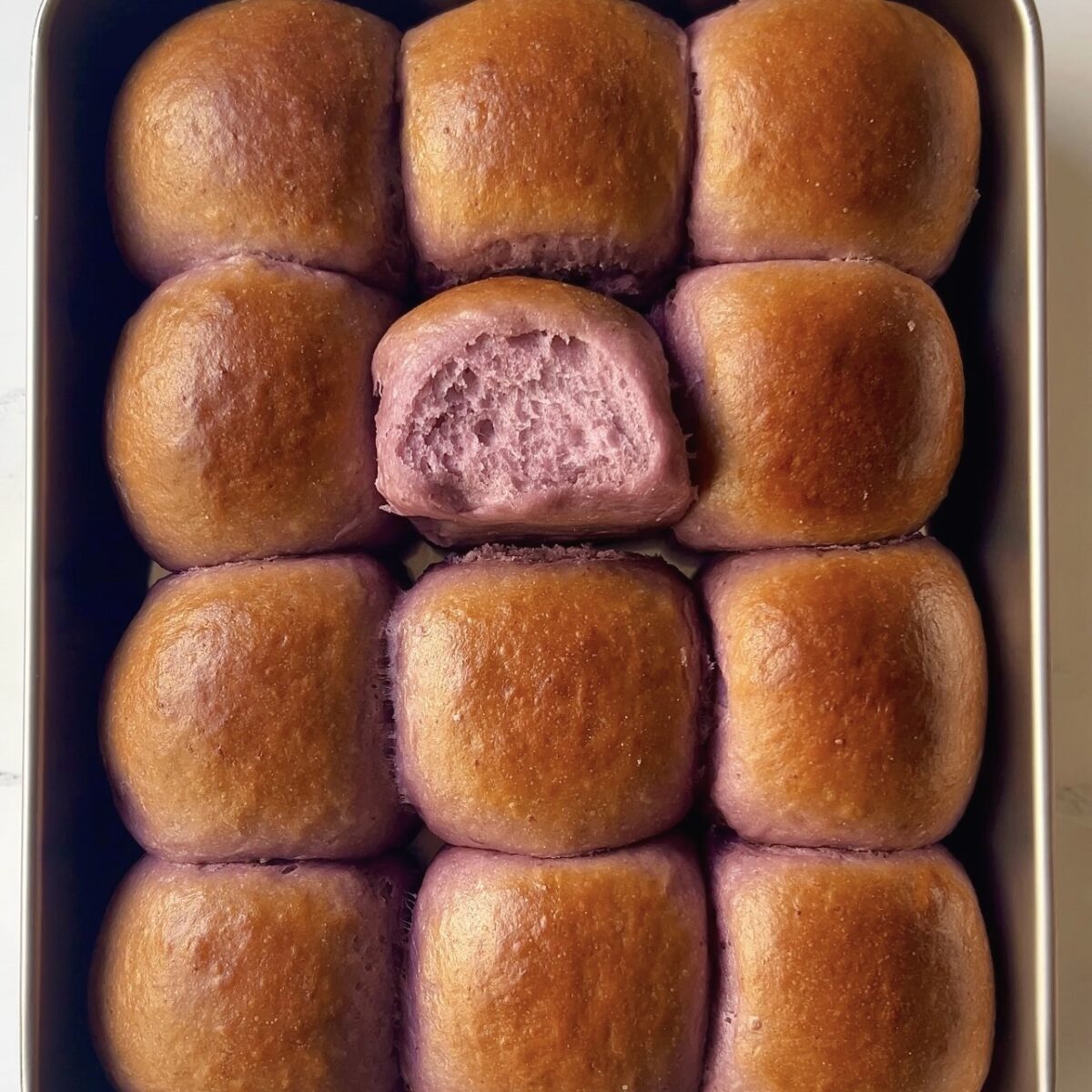
If you’ve been dreaming about King’s Hawaiian’s limited-edition Ube Coconut Sweet Rolls and, like me, shamefully cried when you missed out on snagging a pack at their sold-out launch, this Homemade Ube Coconut Sweet Rolls copycat is your answer. Until they hit stores again, I’ll show you how easy (and fun!) it is to make your own at home.
So real talk: I was ready for this launch - I set my alarm for 9AM sharp, wide awake and bright-eyed, coffee in hand, finger poised to click “Add to Cart” the second those King’s Hawaiian Ube Coconut Sweet Rolls went live. And what happens? Their website immediately crashes from all the people trying to snag a pack at the same time! I sat there refreshing like a crazy person, only for the page to finally load... and hit me with the heartbreaking message: SOLD OUT. In less than half an hour. The despair. The sigh.The empty cart! Waaaaa....
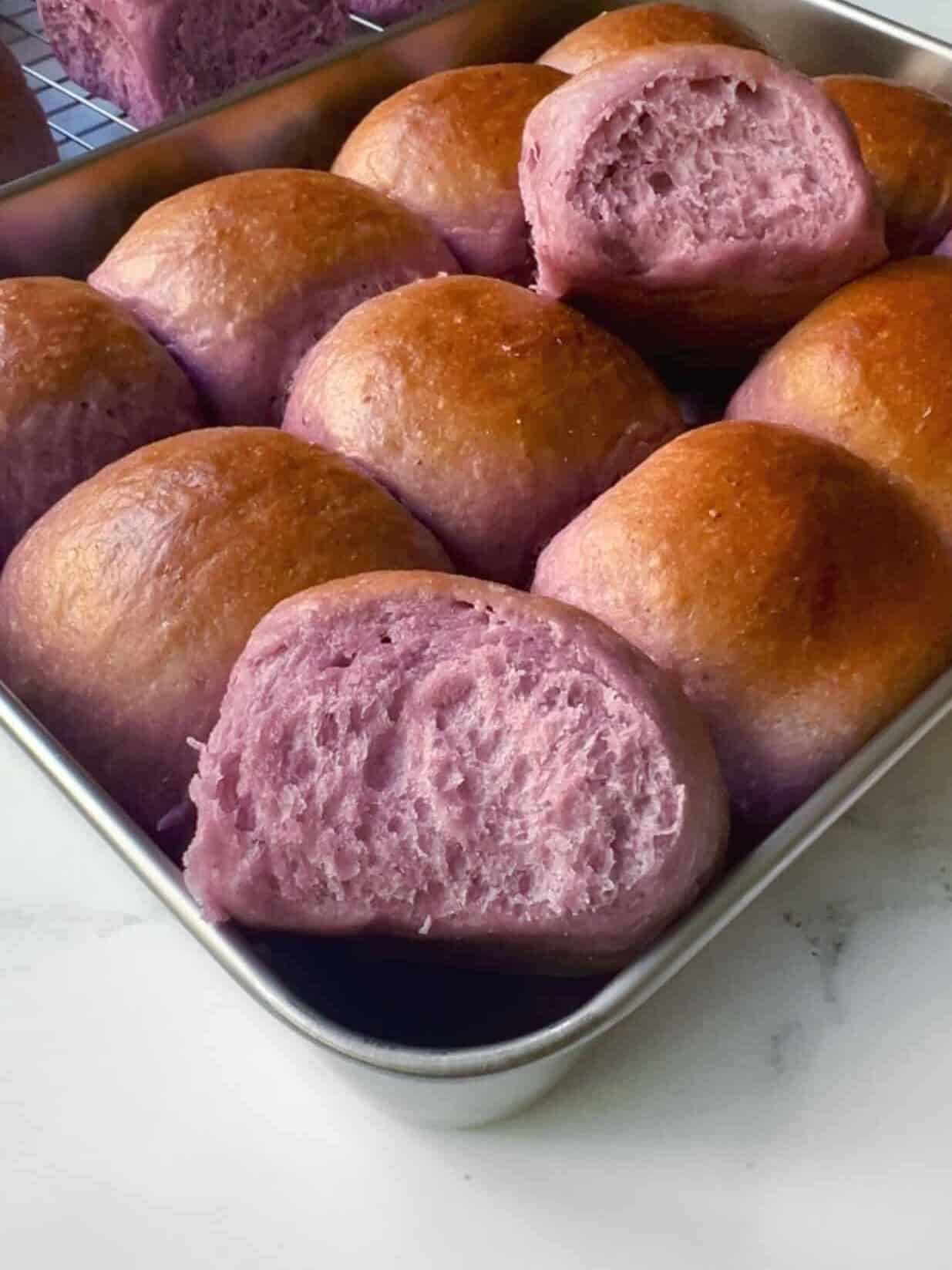
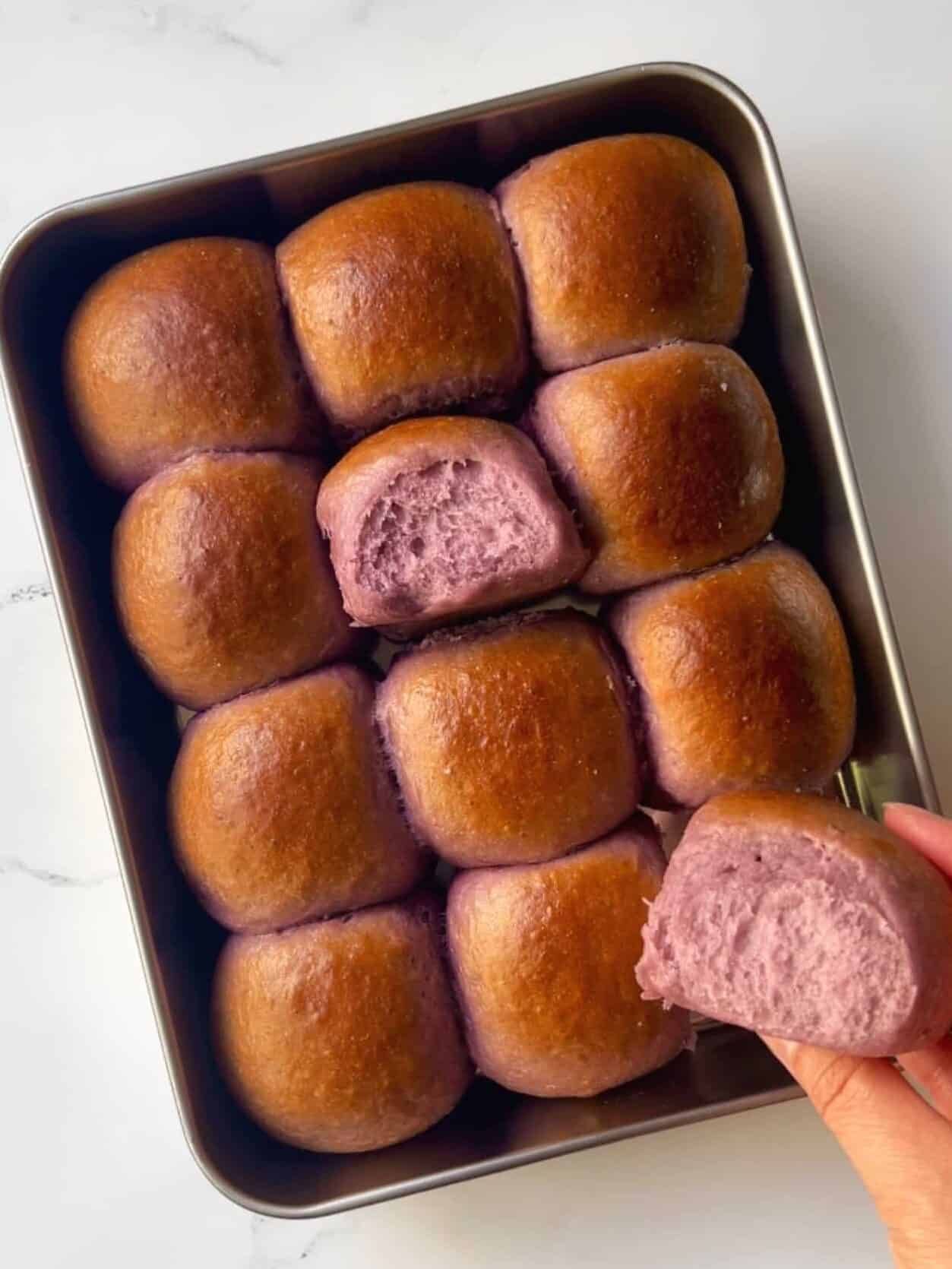
But hey - that's exactly what inspired me to make my own homemade Ube Coconut Sweet Rolls. And although I can't compare them to the original, I can confidently say they came out sweet, tropical, and pillowy soft. The enriched dough is made with sweet Ube jam (aka halaya), creamy coconut milk, pineapple juice, and the tiniest drop of Ube extract to give it that boost of color.
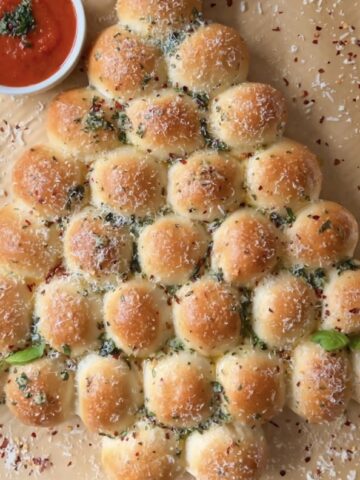
Want to learn more unique dinner rolls recipes? Be sure to check out my Festive Holiday Dinner Rolls and my ulimate Cheesy Pull-Apart Christmas Tree Bread recipes and save them for later!
Don't worry - I'll be sharing all my best tips for working with enriched doughs so you can confidently nail this bake. Let's get started....
Jump to:
What is UBE?
Ube (Dioscorea alata) is a purple yam, native to Southeast Asia. Most people mistaken it for purple sweet potatoes or taro root, but Ube is in fact a yam. Ube is subtly sweet, with nutty and rich vanilla notes with a touch of coconut aroma. The texture of cooked Ube is moist and similar to mashed potatoes. Known for its vibrant color, Ube is widely used in desserts, particularly in the Philippines, where a key ingredient is Ube halaya (or jam). Some jars are simply made with mashed ube, sugar, and coloring like this jar I used, while others contain buttermilk, sugar, and butter.
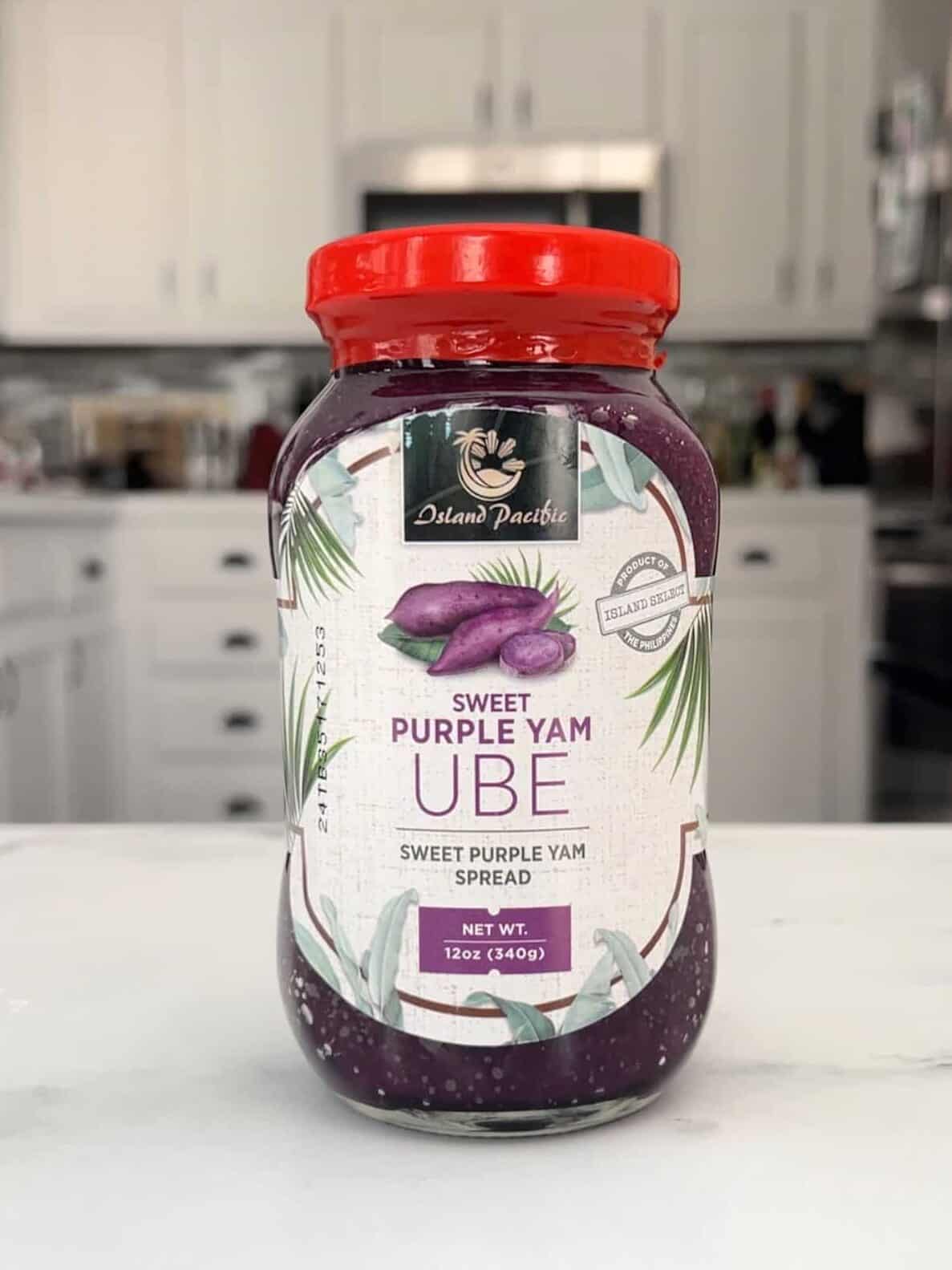
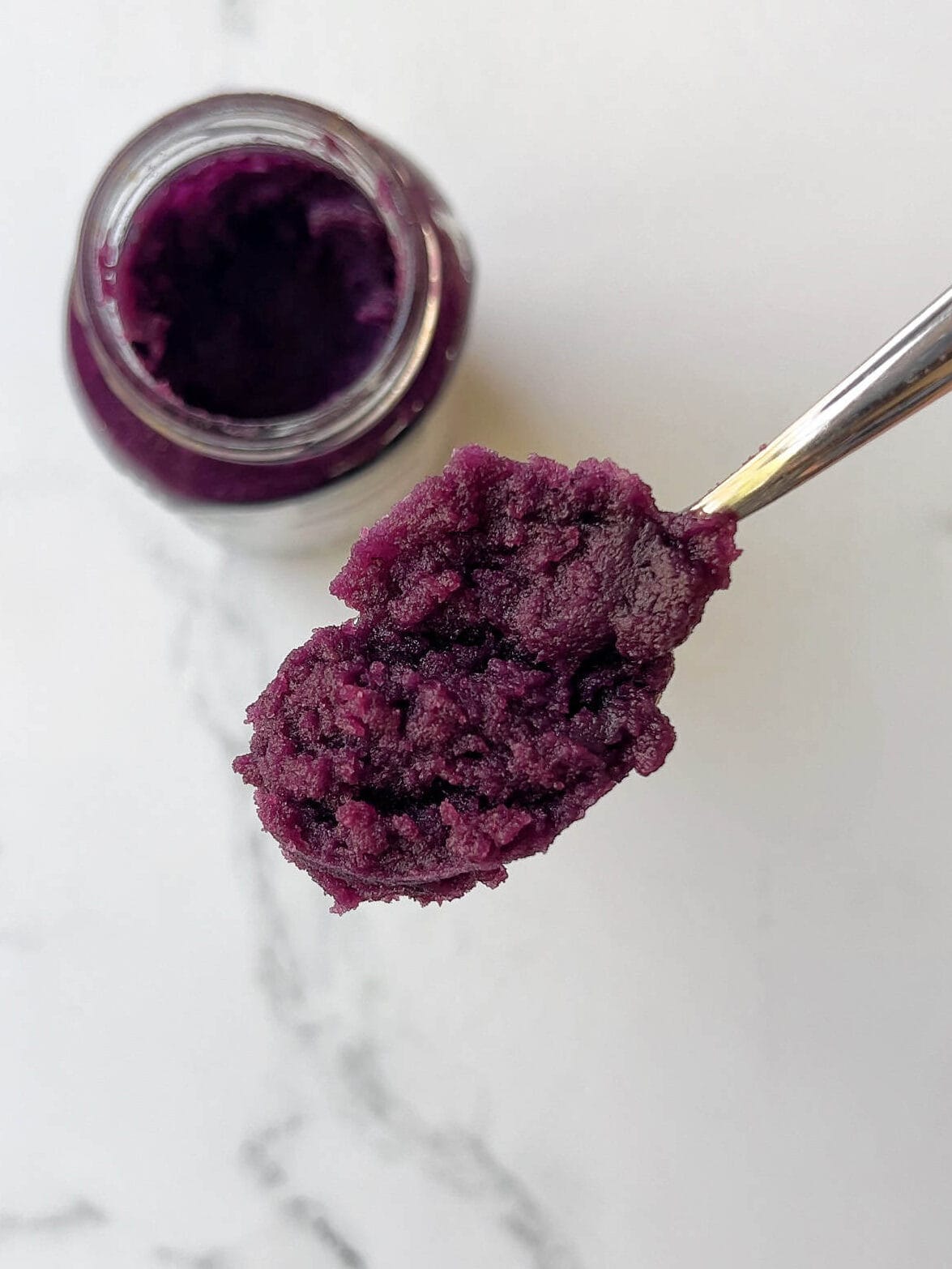
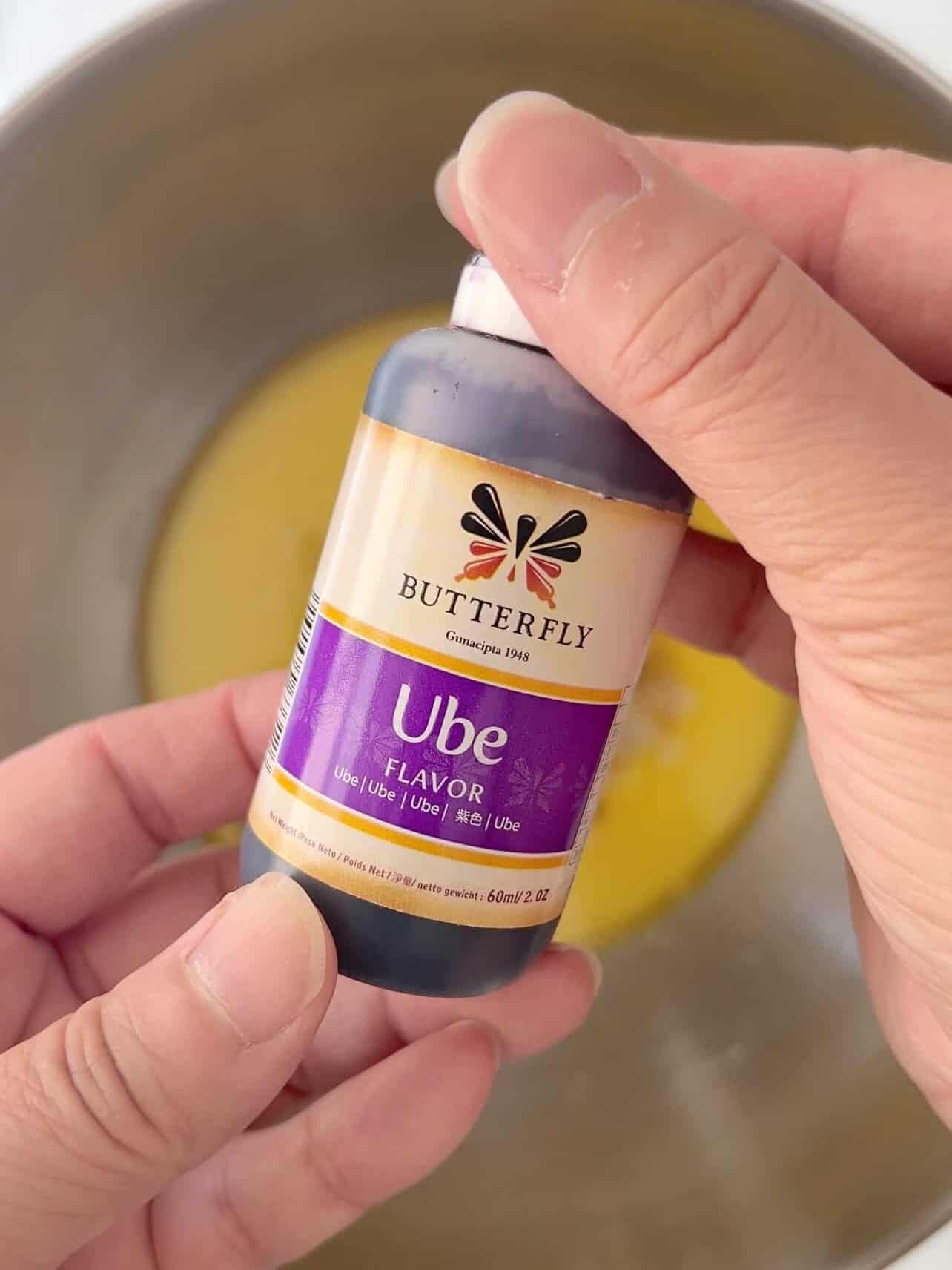
You can find Ube halaya in major Filipino or Asian grocery stores such as Seafood City and Island Pacific Market - same with Ube extract. I'm not entirely sure if King's Hawaiian adds Ube extract to their recipe - my guess is no. I have baked them both ways - using no Ube extract and another batch adding the tiniest drop. Although I didn't notice a significant taste difference, I'd have to say I prefer adding a small amount of extract as it gives the bread a great boost of color!
Key Ingredients For Homemade Ube Coconut Sweet Rolls
- Instant Dry Yeast: You can use active dry yeast, however it would require you to activate it. Stir the yeast with the coconut milk slightly warmed (95-100ºF), allow it to sit for 10 minutes until visible foamy, then add the mixture to make the dough. Using instant dry yeast is much easier - simply add it with your dry ingredients away from the salt.
- All-purpose flour: I personally prefer using all-purpose flour for sweet rolls in general, but feel free to swap in bread flour. I feel all-purpose flour leads to a softer more tender bread crumb, which is perfect for sweet rolls, dinner, or cinnamon rolls. Using bread flour yields a more chewy texture that I enjoy in my sandwich or sourdough breads.
- Nonfat dry milk powder: Enhances soft texture, boost flavor, and dough's ability to rise.
- Salt: Essential to any dessert bakes to enhance other flavors and balance sweetness.
- Ube halaya (jam): Key ingredient made with mashed ube and sugar.
- Granulated sugar: Most of the sugar will come from the Ube halaya, so we add a reduce amount compared to other sweet roll recipes.
- Coconut milk: Full-fat, shaken.
- Pineapple juice: Provides a distinct tropical sweetness, acidity, and subtle tang.
- Butter: Unsalted, melted.
- Eggs: Large.
- Vanilla extract: Complements ube and coconut flavors.
- Ube extract: Optional, but adds vibrant color.
How To Make Homemade Ube Coconut Sweet Rolls
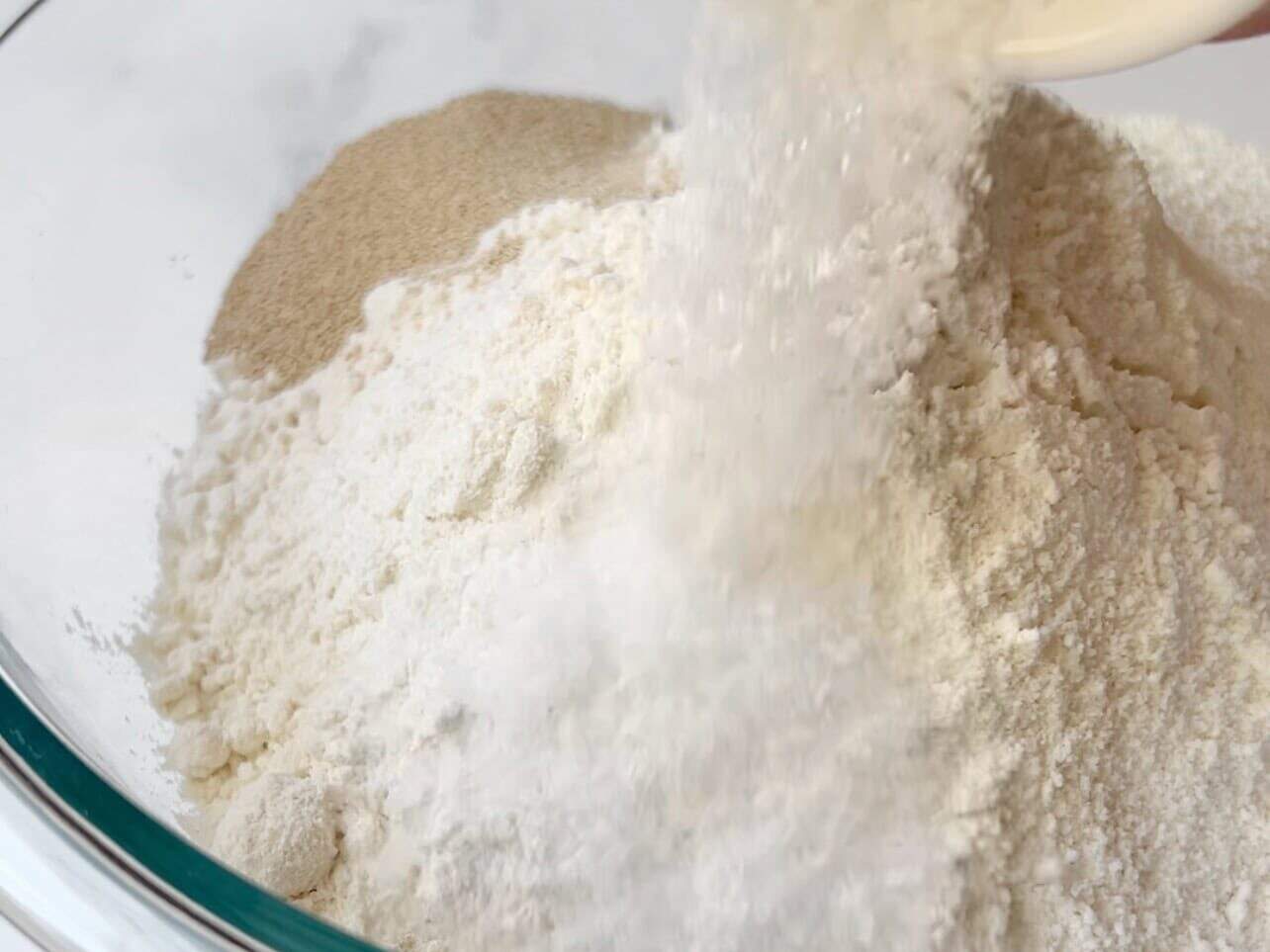
Salt can inhibit or kill yeast, so add instant yeast and salt in separate places inside the mixing bowl. Once you give it a mix, the flour will coat them both and then the yeast and salt can mingle together.
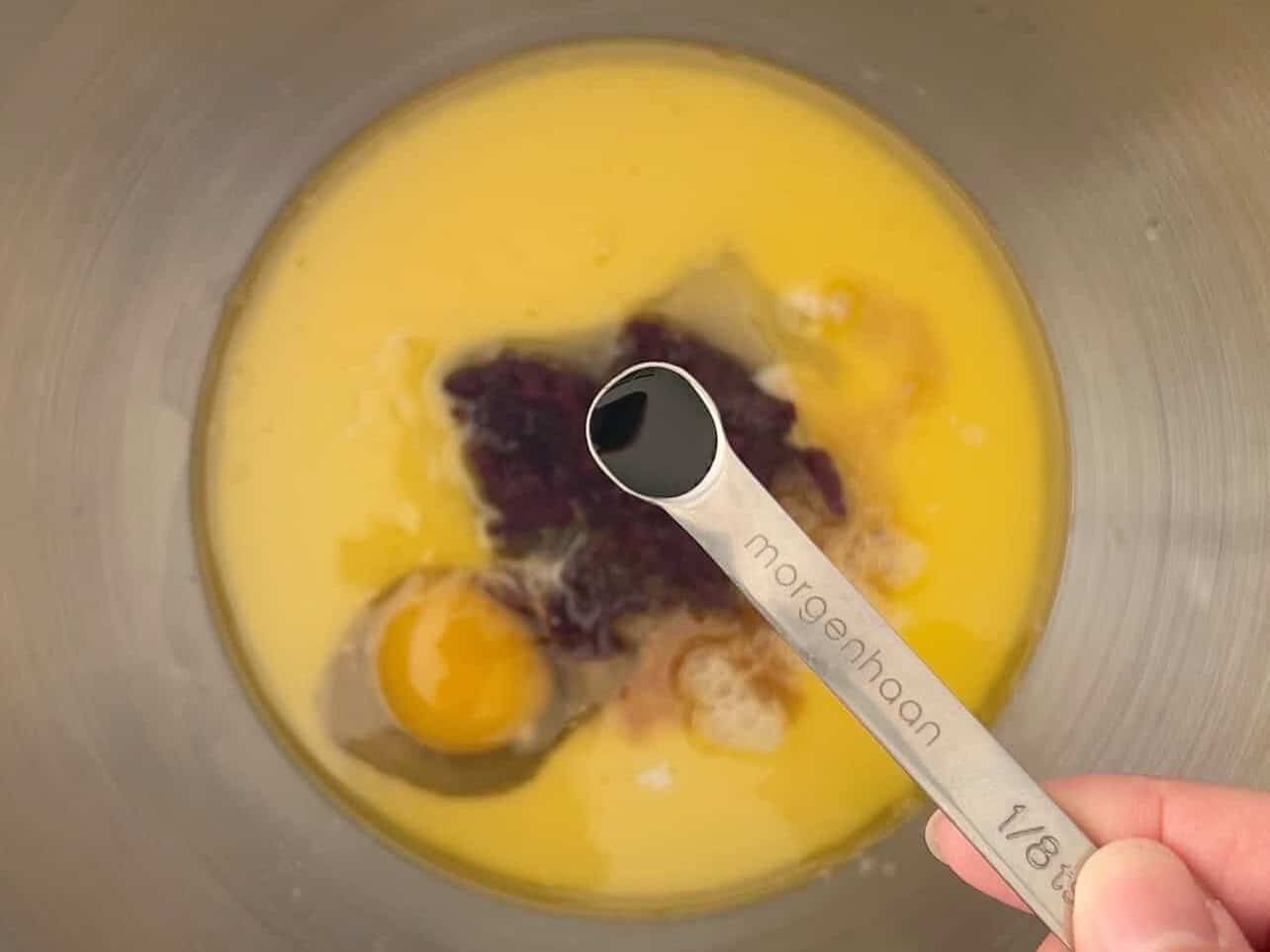
Make sure to measure ingredients correctly - use that kitchen scale! Add Ube extract sparingly - a little goes a long way.
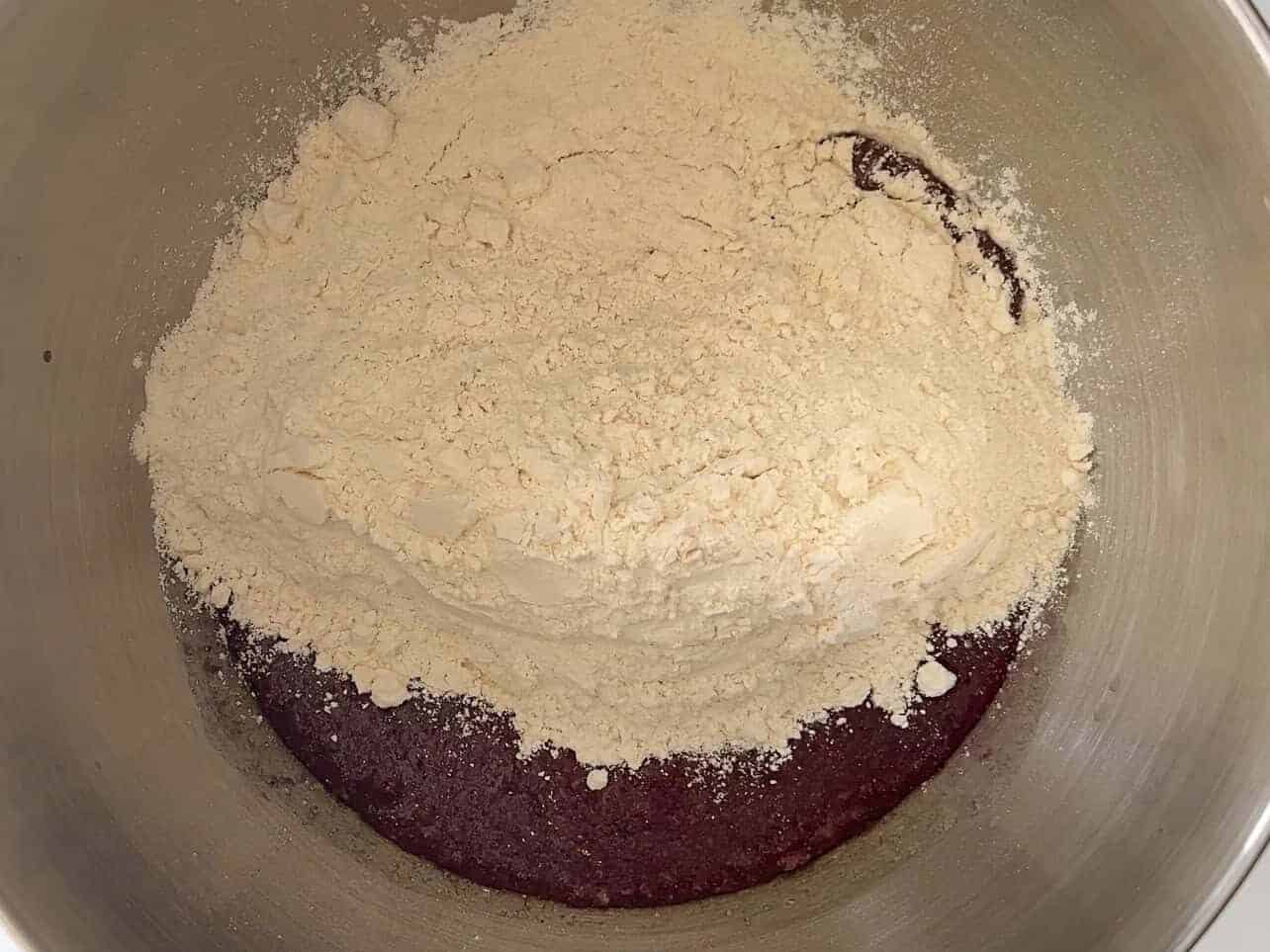
Combine the dry and wet ingredients. Feel free to mix dough by hand - it will just take some a little more time and strong arm muscles!
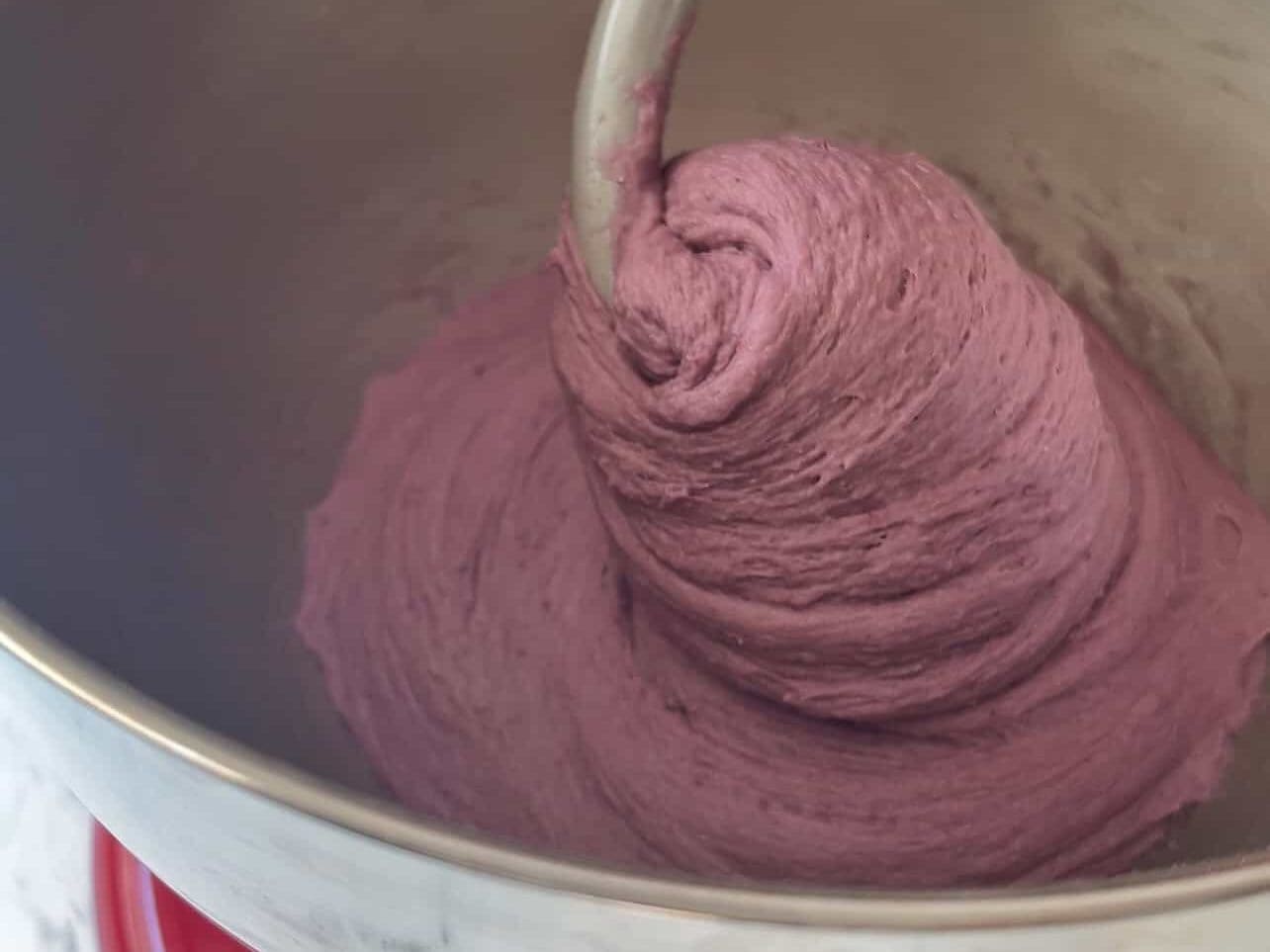
The dough should be slightly sticky and tacky. With help of a spatula, it should release easily from the bowl with minimal sticking. Resist the urge to add extra flour.
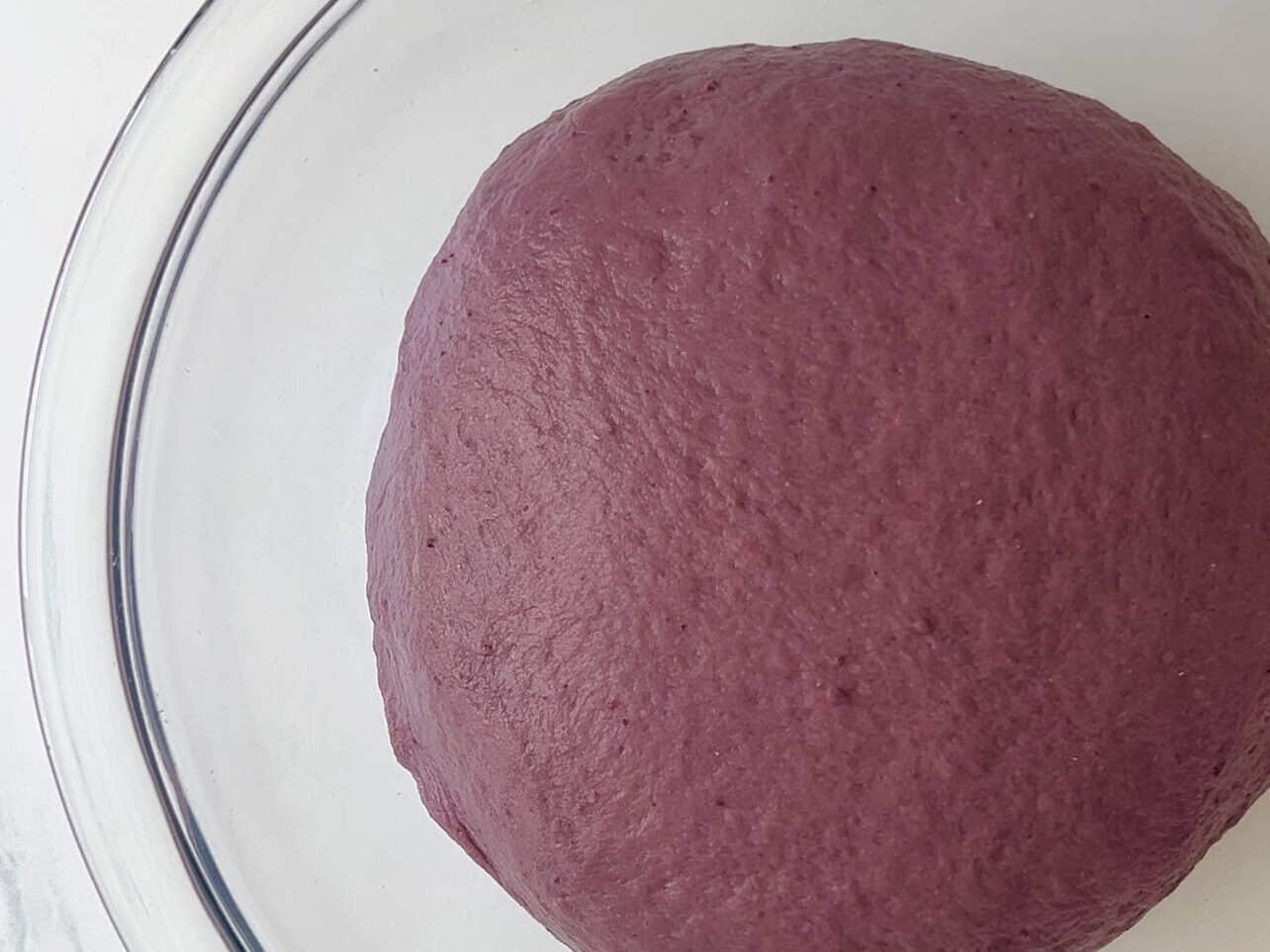
Roll dough into a ball, cover, set in a warm spot, and allow it to rise. Remember: the more enriched the dough (egg, milk, butter, or any fats) = the longer the rise time. This dough will most likely rise only 50%.
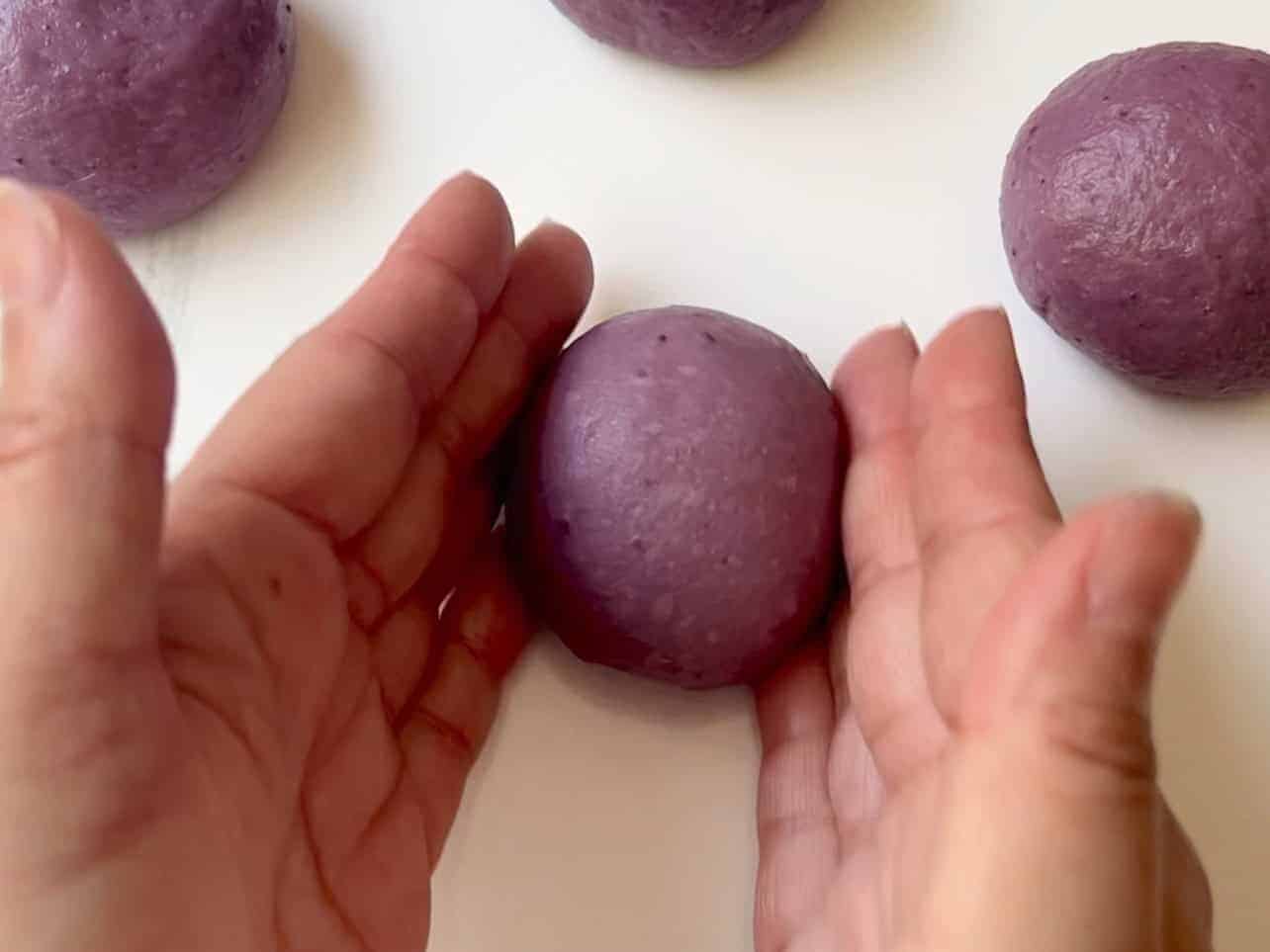
Punch out and divide into 12 equal dough balls about 68-70 grams each.
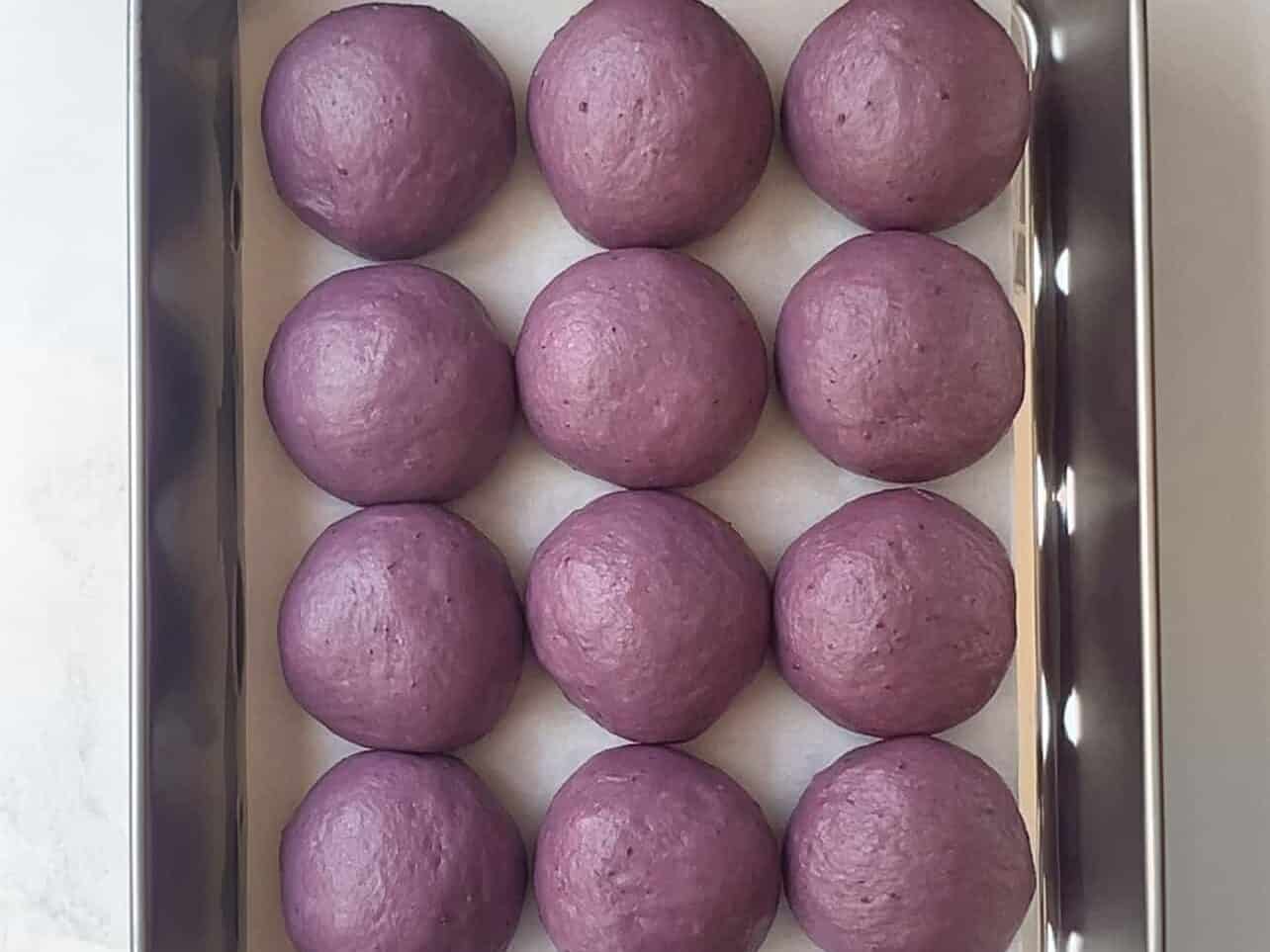
Arrange in lined rectangle pan, cover, and proof in warm spot for the second rise.
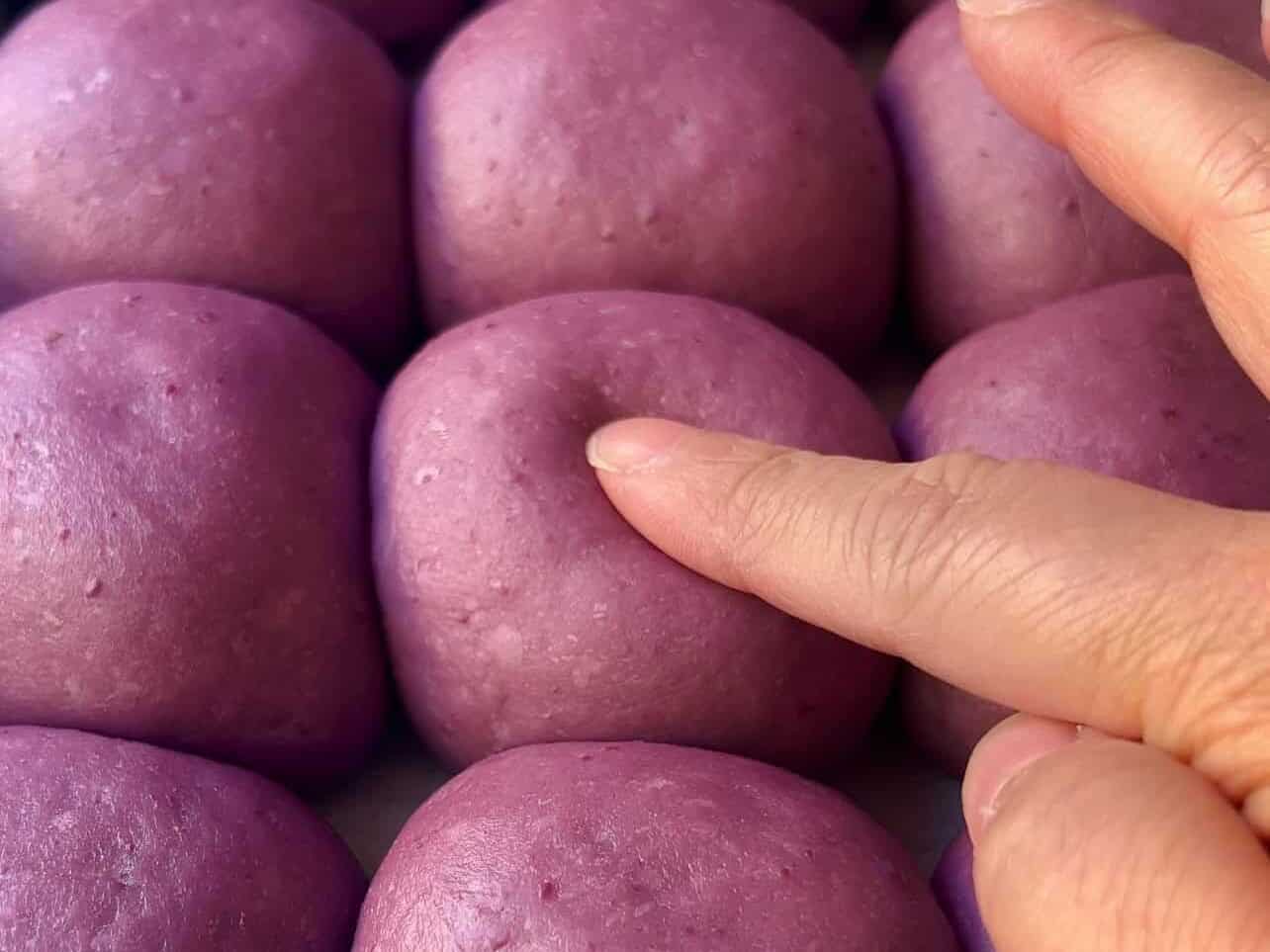
Pro-tip: The best visual cue to know when dough is adequately proofed and ready to bake is to do a finger poke test. If the dough springs immediately back to its original shape (as if you didn't poke it at all), it's not ready. Allow it to rise longer. Once the finger indent stays for a second then SLOWLY retract back, then it's ready to bake.
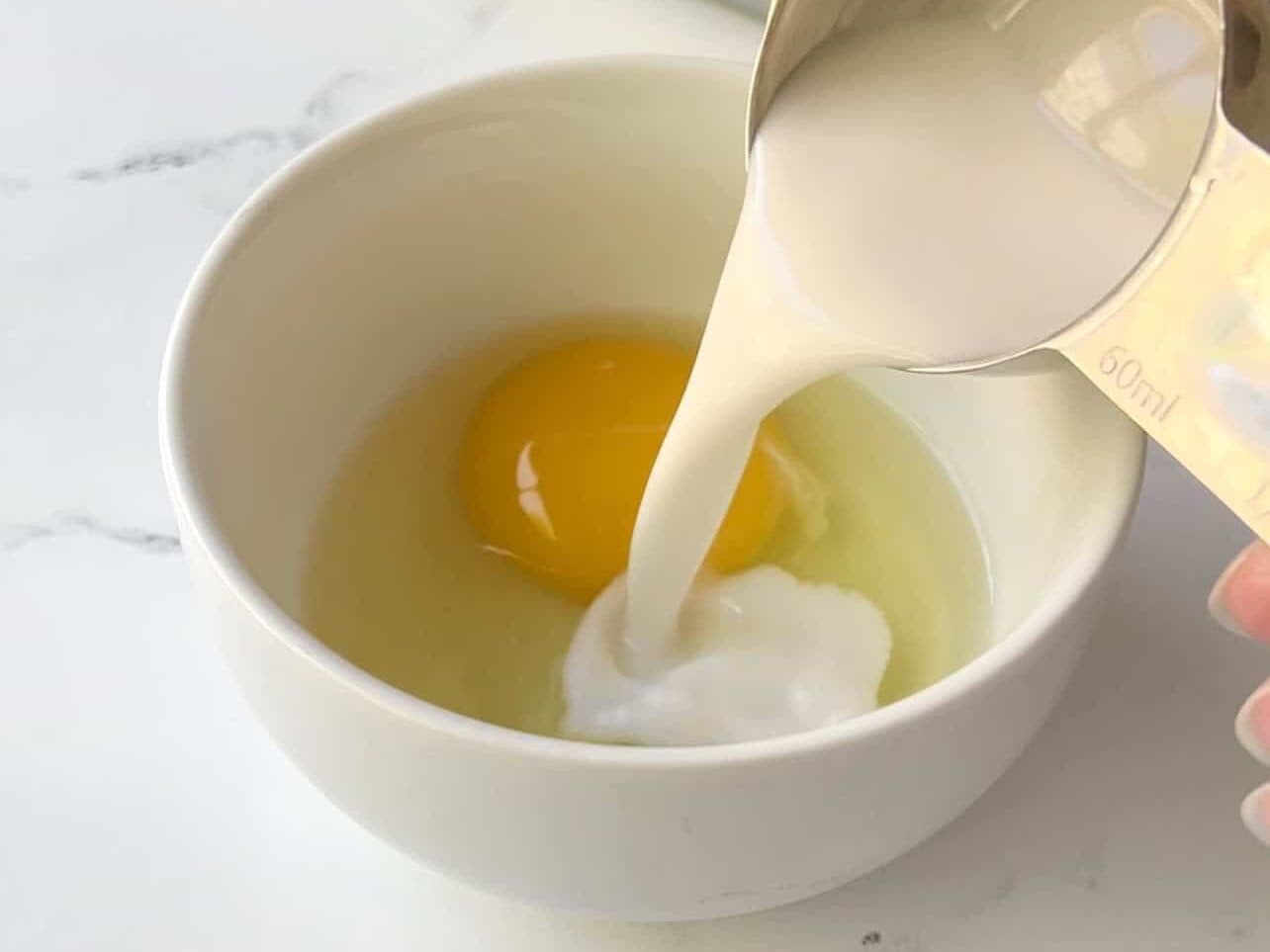
For the final egg wash, you can use just the egg, milk (or coconut milk in our case!), or both.
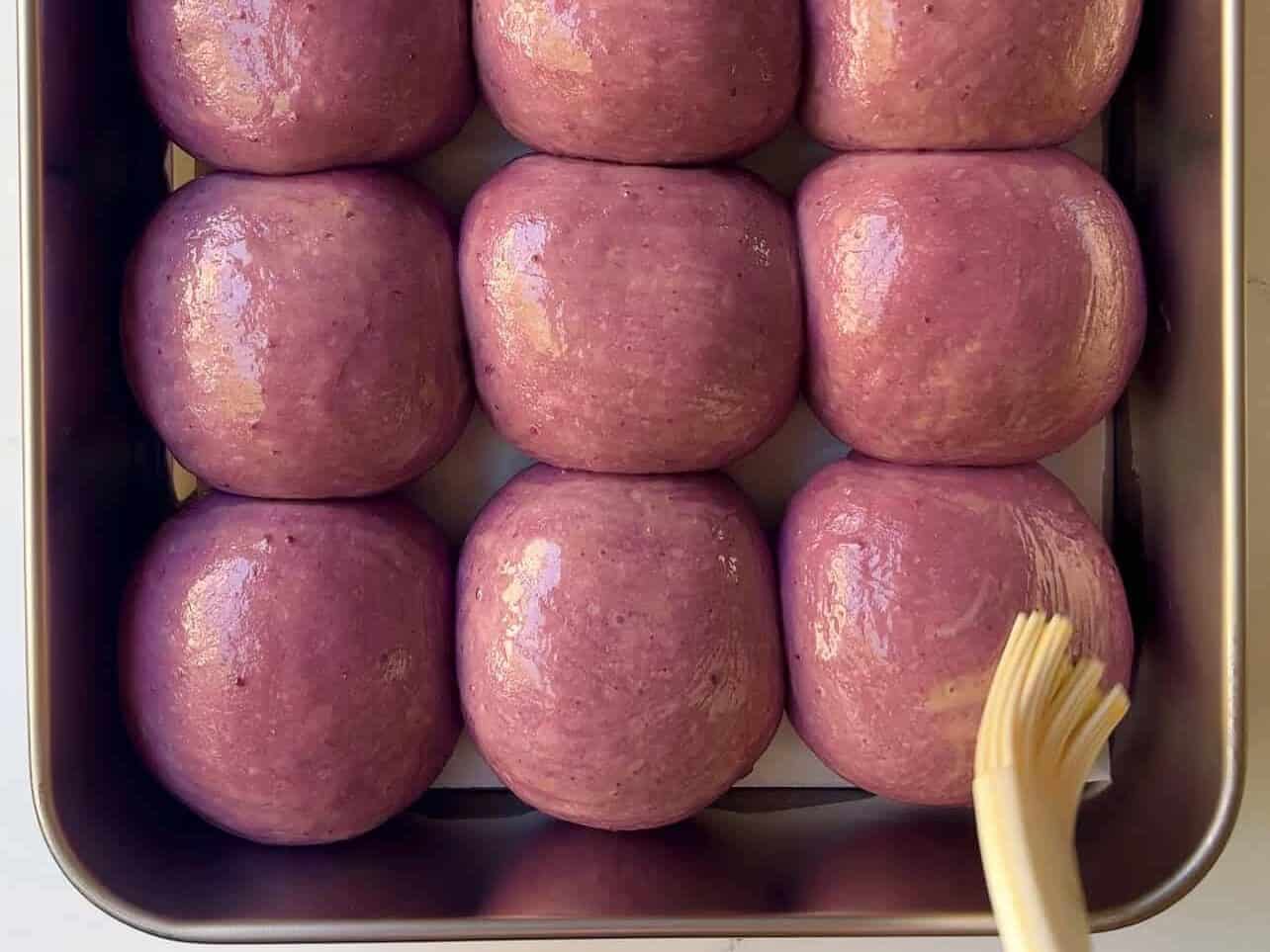
Brush egg wash evenly and bake.
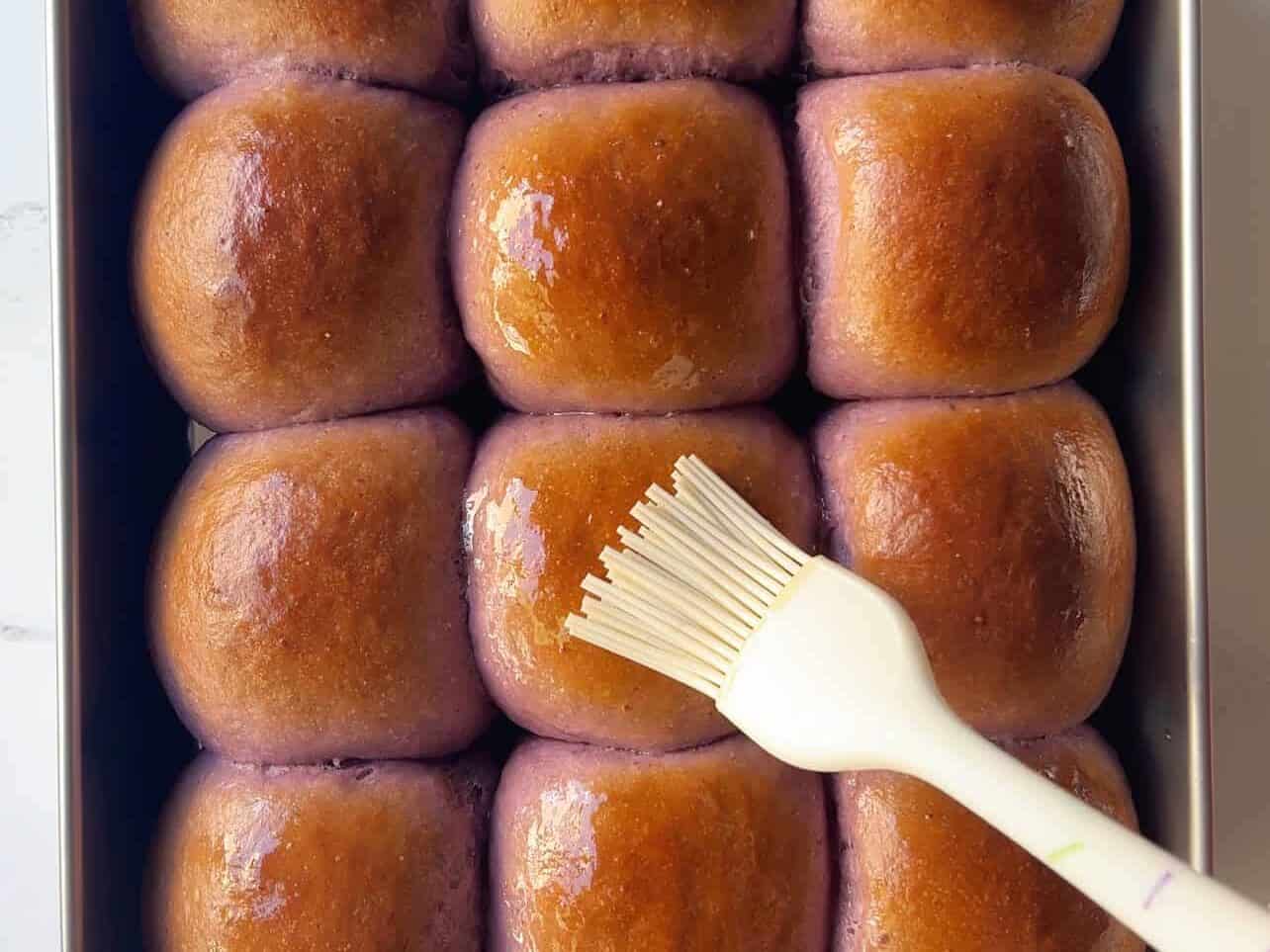
Once out of the oven, brush on melted butter.
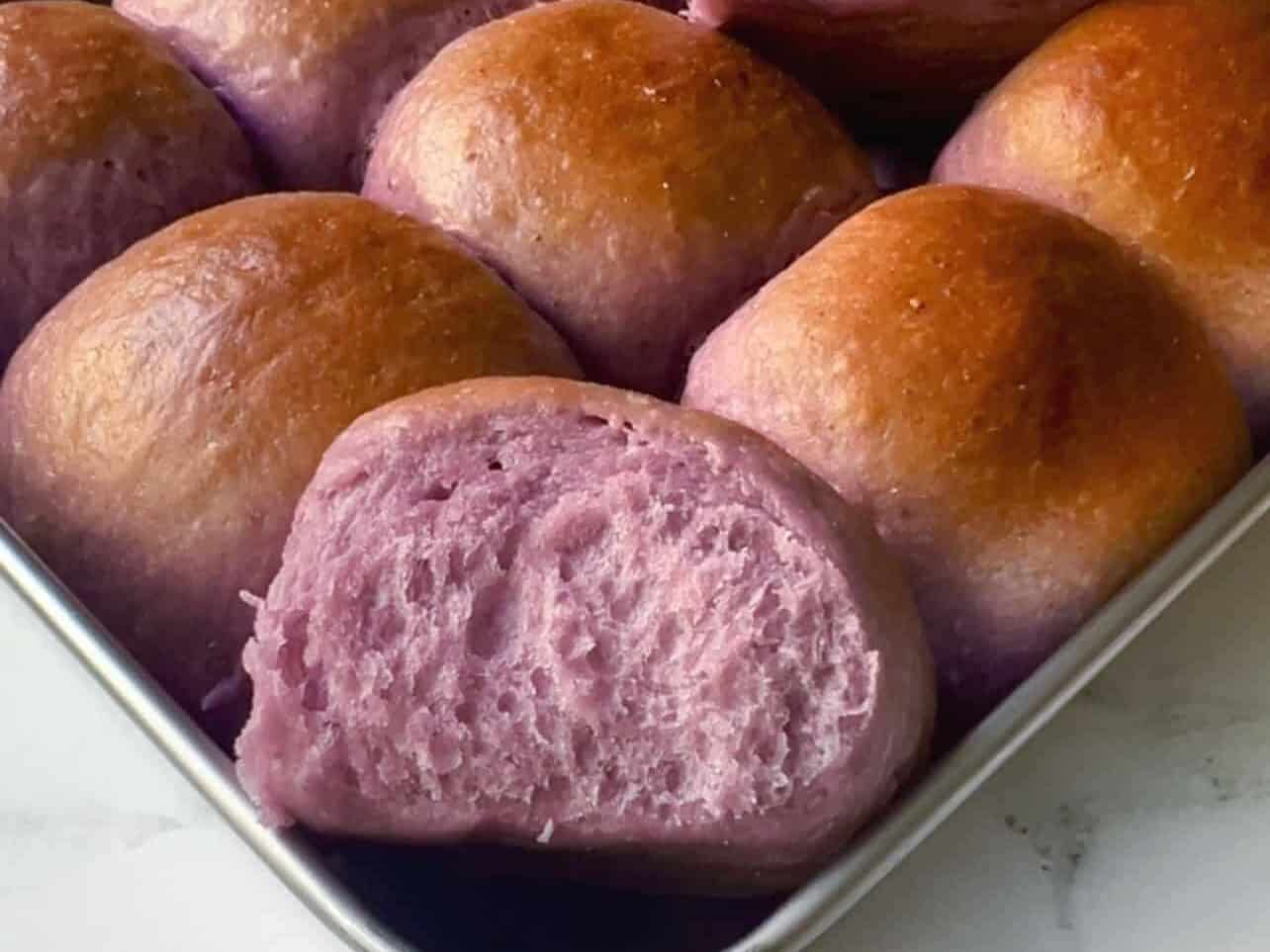
Allow it to cool slightly, then enjoy!
Suzy's Tips For Success
- Visual cues > recipe times: As I provide time guidelines like all recipes, many of the my tips will teach you to trust proven visual cues than sticking to what's written in recipes. I get it, we all love following what the recipes say to a tee - I'm the same way! Here's the thing we need to consider: temperature. Your kitchen may be cooler or warmer than mine, and that is a big determining factor on how our dough reacts. If your kitchen is warmer, things will happen faster. If it's cooler, your dough will react slowly. So if you learn to look for visual cues rather than sticking to the recipe, you will learn how to work with any dough.
- Measure your flour and ingredients accurately: For best results, use a kitchen scale. They will give you the reassurance you need that you have the right amount of ingredients. I'm not saying you cannot achieve successful bakes using measuring cups, but this usually comes with time and experience. Flour is the the most common ingredient people do not measure correctly, so grab that scale. Once you use one, you'll wonder how you went so long without one.
- Allow enough time for dough to rise and proof: This isn't a quick bread recipe, so give yourself ample time on bake day. If you rush the process, you may be able to tell by your finished bread texture. Please refer to the Instructions section above on proofing to see what to look for.
Best Way To Store Ube Coconut Sweet Rolls
You can store leftover rolls in an airtight container at room temperature for up to two days. Freeze them by wrapping in foil, then sealing them in freezer ziplock bags for up to one month. To reheat, thaw rolls at room temperature, then bake in 300ºF (150ºC) oven for about 10 minutes.
FAQ
Proofing dough the next day can be tricky - I prefer to bake dough the same day. However if you'd like to prep ahead, follow the recipe until you placed your divided dough balls into your pan. Cover and chill pan in fridge overnight. The next day, bring your pan up to room temperature. Allow rolls to proof covered, then poke the dough with your finger. If the dough springs back immediately to its original shape, it is not ready. Allow it to rise longer. When your finger indent springs back slowly and fill in after a few seconds, that is when it's ready to bake.
You can attempt a 1-to-1 swap using a gluten-free flour blend instead of all-purpose flour. However, the finished bread texture and crumb will always differ with lack of gluten.
You Might Also Like...
Equipment
- stand mixer optional
- 10x8-inch rectangle baking pan or similar
- Rubber Spatula
- dough scraper optional, but very helpful
- parchment paper
Ingredients
Dough
- 2¼ teaspoon instant dry yeast
- 3¼ cups all-purpose flour
- 1 tablespoon nonfat dry milk powder
- 1 teaspoon kosher salt
- ⅓ cup ube halaya (jam)
- ¼ cup granulated sugar
- ¼ cup unsalted butter melted and cooled
- ½ cup coconut milk full fat, shaken
- ¼ cup canned pineapple juice not fresh
- 1 large egg
- 1 teaspoon vanilla extract
- ⅛ teaspoon ube extract optional
Egg Wash
- 1 egg
- 2 tablespoon coconut milk
Butter Finish
- 1 tablespoon butter melted
Instructions
- In a medium mixing bowl, combine flour, yeast, salt, and milk powder. Place yeast and salt in separate areas of the bowl before mixing, as salt can kill or inhibit the yeast. Once mixed and flour coats them both, freely combine them together. **If you're using active dry yeast, activate it first - add yeast to the coconut milk slightly warmed (95-100℉) in a small bowl and allow it to foam for 10 mins before adding the mixture with the rest of the dough ingredients.2¼ tsp instant dry yeast , 3¼ cups all-purpose flour, 1 tsp kosher salt
- In a large or stand mixer bowl, combine and mix ube halaya, sugar, melted/cooled butter, coconut milk, pineapple juice, egg, vanilla, and ube extract. Add in the dry ingredients and knead for 10 minutes. The dough will be tacky and slightly sticky, but manageable - resist the urge to add extra flour unless absolutely necessary. Use a rubber spatula or bench scraper if needed - the dough should release from the bowl with minimal dough sticking.⅓ cup ube halaya (jam), ¼ cup granulated sugar, ¼ cup unsalted butter , ½ cup coconut milk, ¼ cup canned pineapple juice , 1 large egg, 1 tsp vanilla extract, ⅛ tsp ube extract
- Roll dough into a rough ball and place into a clean greased bowl. Cover and place in a warm area. Allow it to rise for approx 2 hours until dough visibly increases 50% in volume. Prep rectangle pan with parchment paper.
- Once risen, punch dough and transfer onto counter or working surface. Divide and roll into 12 equal dough balls about 68-70 grams each. Place in prepared line pan. Cover and return pan to warm area for the final proof. Depending on your kitchen temperature, the amount of time may vary. I keep my kitchen cool around 70-72℉(21-22℃), and proofing takes me around 2 hours. If you keep your dough in a warmer environment, it will rise faster.
- Preheat your oven for at least 30 minutes to 350℉ (175℃).
- Do the finger poke test to check if dough has proofed the correct amount of time. Press dough gently with your finger. If the indent immediately springs back to its original shape (as if poke didn't even happen), then it is not ready. Allow it to rise longer. Once you poke it and finger indent stays for a few seconds, then SLOWLY retracts back to shape, then it's time to bake.
- In a small bowl, make the egg wash by whisking together egg and coconut milk. Brush an even layer over the rolls. Bake for 20-22 minutes until tops are golden brown. Brush with melted butter and serve warm.1 egg, 2 tbsp coconut milk, 1 tbsp butter
Notes
- Nutritional information is only an estimate. The accuracy of the nutritional information for any recipe on this site is not guaranteed.
- For the best consistent results, use a kitchen scale. Measuring ingredients accurately gives you the best chance for success, and a scale will give you the most precise readings.
- Temperature plays an important role in dough fermentation. Use the rise and proof times as guidelines, however be sure to practice learning visual cues to understand your dough stages. Depending on your kitchen temperature, your dough may take more or less time to rise than indicated in the recipe.
Nutrition
Looking for other recipes like this?

Stephanie says
The bread turned out great! But I felt that it didn’t have any flavor, I couldn’t taste the sweetness of the pineapple juice, or the coconut and ube flavor.
Suzy says
Thanks for trying the recipe, Stephanie! This bread is definitely not a punch-you-in-the-face with ube and pineapple sort of bread. Neither is King's Hawaiian's, which was my goal to replicate. It's more of a dinner roll! You can definitely increase the ube extract if you prefer.