
Let me show you how easy it is to use a digital kitchen scale for baking. You may wonder "Why do I need to use a scale when I measure my ingredients in cups?" Because cups are inaccurate. A scale is EXACT. Unlike cooking where you can adjust ingredients as you go, baking requires precision. Mastering this simple practice of weighing ingredients on a kitchen scale will elevate your baking game, make all your recipes more reliable. We spend precious time baking for our friends and loved ones. Let's make sure you start off on the right foot every time by learning how to use a digital kitchen scale.
Jump to:
Who Uses Cups To Measure Ingredients?
Using cups, ounces, gallons, inches, feet, miles, and Fahrenheit all fall under the imperial system of measurements. The metric system uses grams, kilograms, centimeters, kilometers, and Celsius. Here's a fun fact that I feel many people are not aware of, especially if you live in the U.S as I do. Out of 195 worldwide countries, how many countries use the imperial system? Three. Yes, 3. They are Myanmar, Liberia, and the United States. Now I'm not one to jump when everyone else jumps, but I still wonder.... why? Why do almost all these other countries use grams in their recipes? Because it's more accurate, at least in baking. In the U.S. were just taught that cups are reliable and consistent, regardless of what ingredient you're measuring. So let's measure flour.

How Do Beginners Measure Flour?
So if I was to ask you to measure one cup of all-purpose flour, how do you envision yourself doing it? Many of us would open our flour bag, insert the measuring cup, and scoop however much flour your can to fill the cup. To be more precise, you may take a knife or any straight end to level it off the heaping flour.

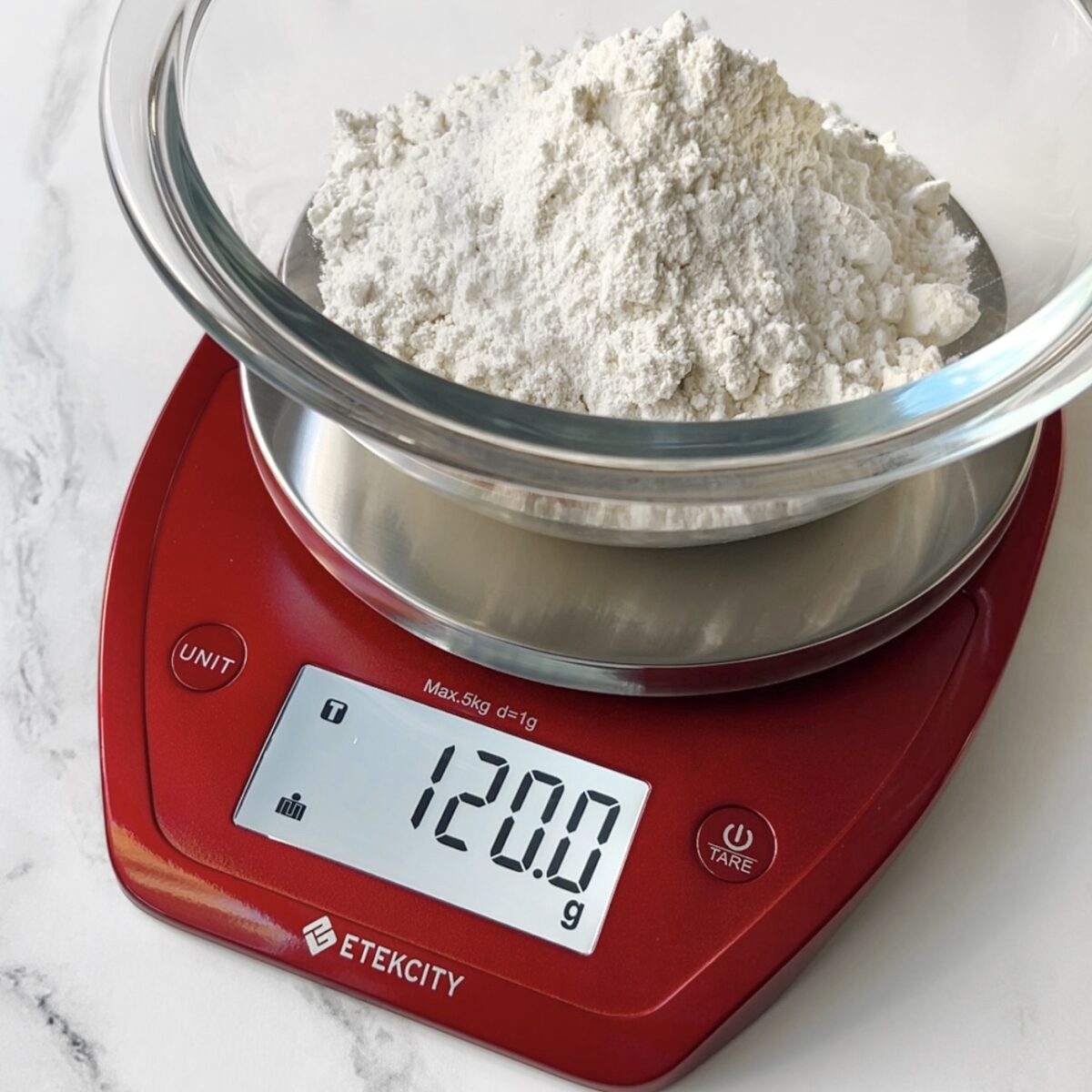
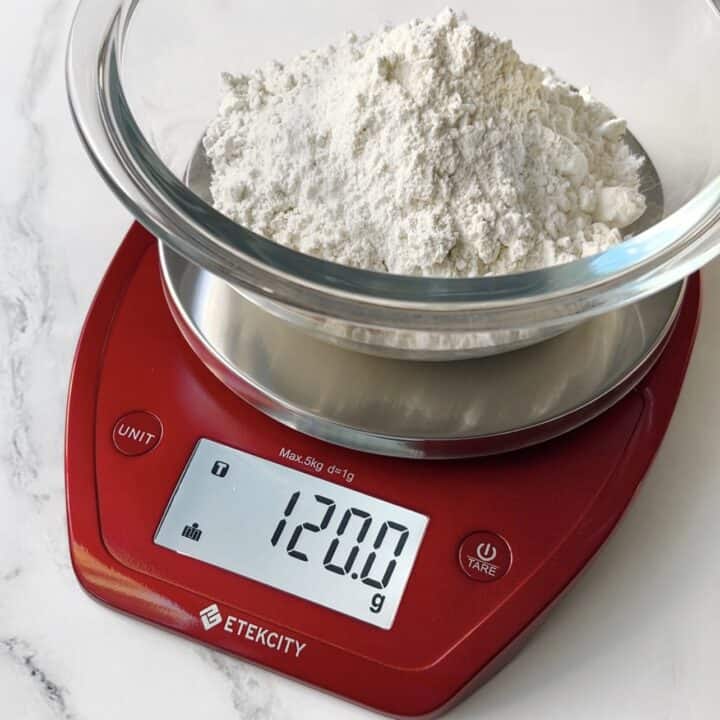
This is how I measured flour when I first started baking. And guess what? It's probably what many of you do, and I don't blame you. Google's answers will vary, but one cup of all-purpose flour will weigh in anywhere between 120-130 grams. Now let's weigh this cup of flour.

152 grams of flour. Why is that? We didn't even get close to 120-130 grams! This is because flour is dense when it's settled in the flour bag. So by simply scooping the flour out, it causes a lot more flour to fit into the cup. For everyone who has some baking experience, we were taught a more correct way to measure flour - fluffing the flour first, spooning in the flour lightly into the measuring cup, then leveling off the excess. So let's do that, and weigh our cup of flour again.
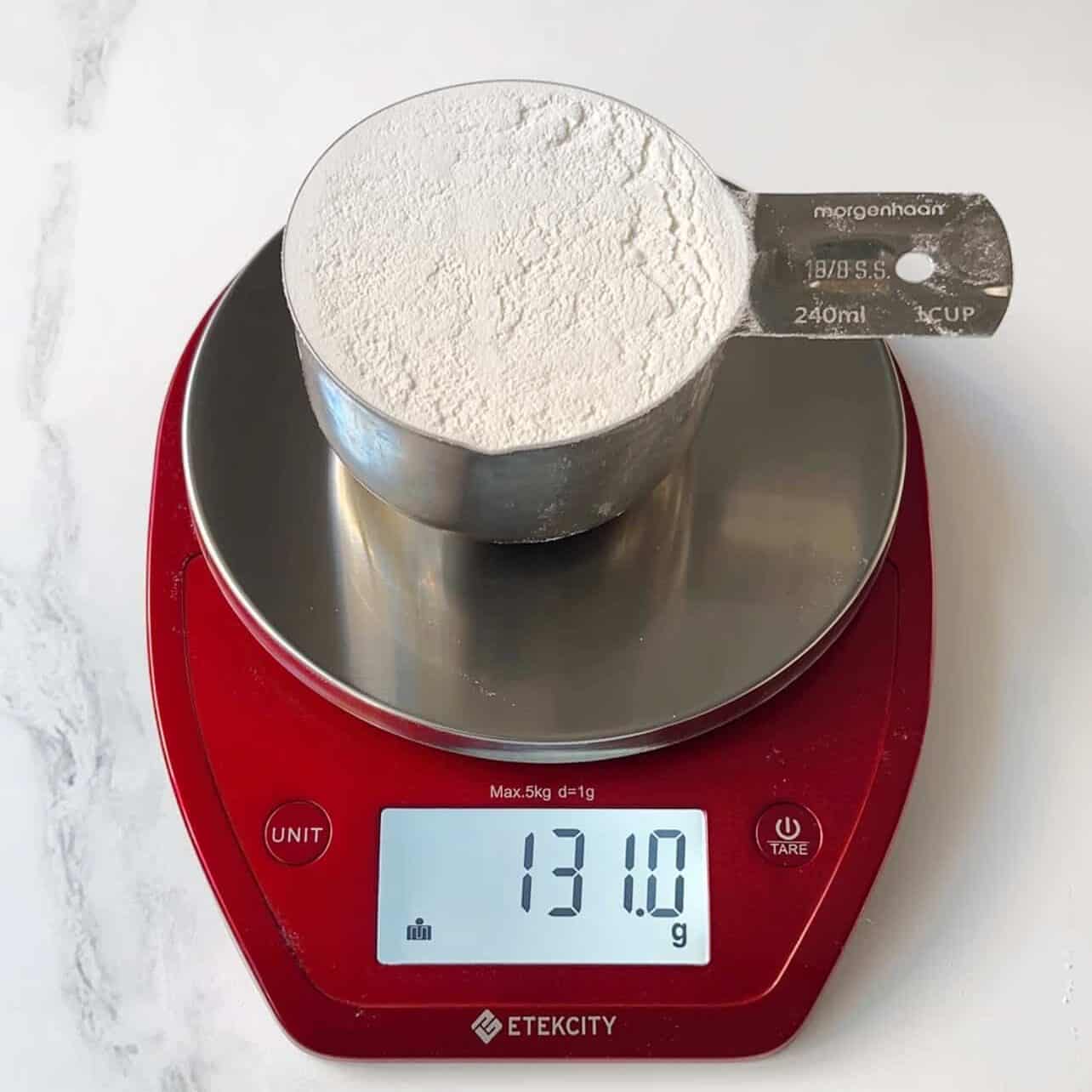
Much closer, right? But what is my point showing you this? Why should we start off our bakes with these inconsistent measurements? We haven't even talked about other ingredients! Because one cup of flour does not weigh the same as one cup of sugar, or one cup of chocolate, or one cup of milk. Measuring cups can only measure volume. Not density. Ingredients may fill the same cup space, but it may not weigh the same amount.
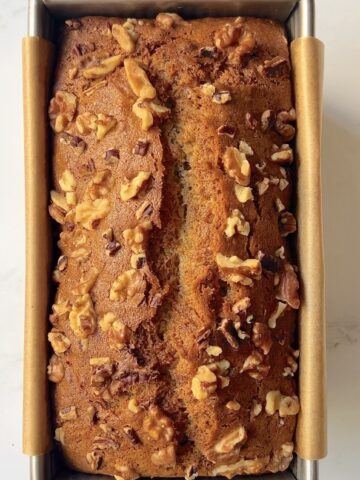
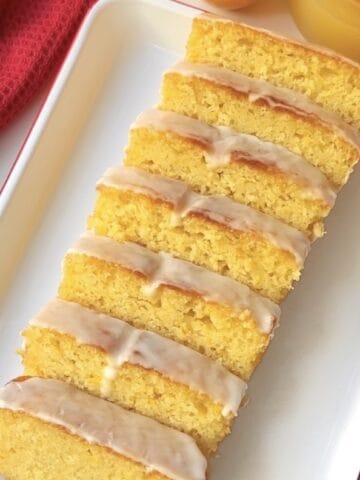
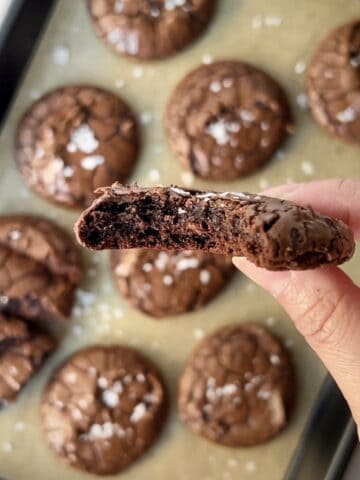
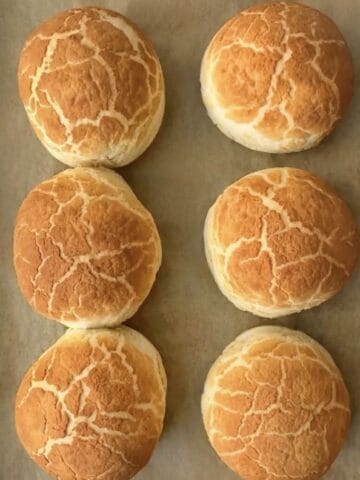
After I learned how to use a digital kitchen scale, I now convert recipe that call for cups into grams. Measuring grams is measuring the exact weight. There's no guessing, it is exact, and it doesn't matter if it's dry or liquid. This is how I bake my Starbucks Copycat Lemon Loaf, Levain-Inspired Chocolate Chip Walnut Cookies, and Dutch Crunch Bread.
Common Measurements I Use
After doing some research, these are the most common measurements I use when trying new recipes. I decided to make it easier on myself and followed the same amount consistently. Unless the recipe indicates otherwise, I will always add 200 grams for one cup of granulated sugar. 120 grams for one cup of all-purpose flour. Through my years of baking, doing this has lead me to consistent bakes. Every experienced baker will have their own conversions, so this list may be different from others you may have seen.
One cup of:
- All-purpose flour = 120 grams = 4¼ oz
- Cake flour = 114 grams = 4¼ oz
- Almond flour = 100 grams = 3⅜ oz
- Granulated or brown sugar = 200 grams = 8oz
- Powdered sugar = 115 grams =3.5oz
- Milk = 240 ml or grams = 8 fl oz
- Butter = 226 grams (approx 14 grams per tbsp) = 8oz
- Chocolate chips = 170 grams = 6oz
If you'd like me to add more ingredients to this list, please let me know in the comments below and I'll try my best to add them to make this a more complete list! Please know the reason I didn't add certain ingredients is because they come in different forms, which means different weights.
For example, one cup of walnut halves = 100 grams or 3½ oz. But one cup of walnuts finely chopped = 130 grams or 4½ oz.
So if you're looking for specific conversions, what I usually do is look at the ingredient label first. Many times, the labels will tell you their serving size, or what they consider a tablespoon or a cup and its weight in grams. Otherwise, I would ask Google, find a onversion from a reliable source, and use it consistently.
Why You Should Learn How To Use A Digital Kitchen Scale
- Measuring cups are not accurate: In this example of measuring flour, you can clearly see that scooping the same amount of flour while using the same measuring cup is not reliable. They can measure only volume, not density. Since different ingredients have different density one cup of flour is NOT the same as one cup of sugar. One cup of flour is NOT the same as one cup of milk. So measuring in cups can lead to discrepancies in your bakes, especially if you double or triple the recipe.
- Measuring in cups results in a lot more dirty dishes to wash. You might use a different cup or spoon for every different ingredient. Measuring all these out takes much more time, versus adding them all into one bowl using a kitchen scale.
- Kitchen scales have become very affordable, available to purchase everywhere, and comes in all different styles: You can find a cheap scale at almost any store that sells kitchen supplies - Walmart, Target, Amazon, etc. I've tried many, and it's mainly personal preference. This is my current kitchen scale. It's lightweight, auto-shutoff, easy to clean and store, and registers to 0.1 grams. Find one that has an easy-to-read display (imagine your favorite large bowls you usually use placed top), and gives you the option to switch from grams to ounces. Pro tip: select one that runs on AAA batteries. Some uses small circular watch batteries. I don't know about you, but I despise buying those. I can never remember their 4-digit. numbers! AAA batteries are easy to spot and available everywhere.
How To Use A Digital Kitchen Scale

Push power button to turn on. Press Unit button to toggle and select unit of measurement. Select grams (g).
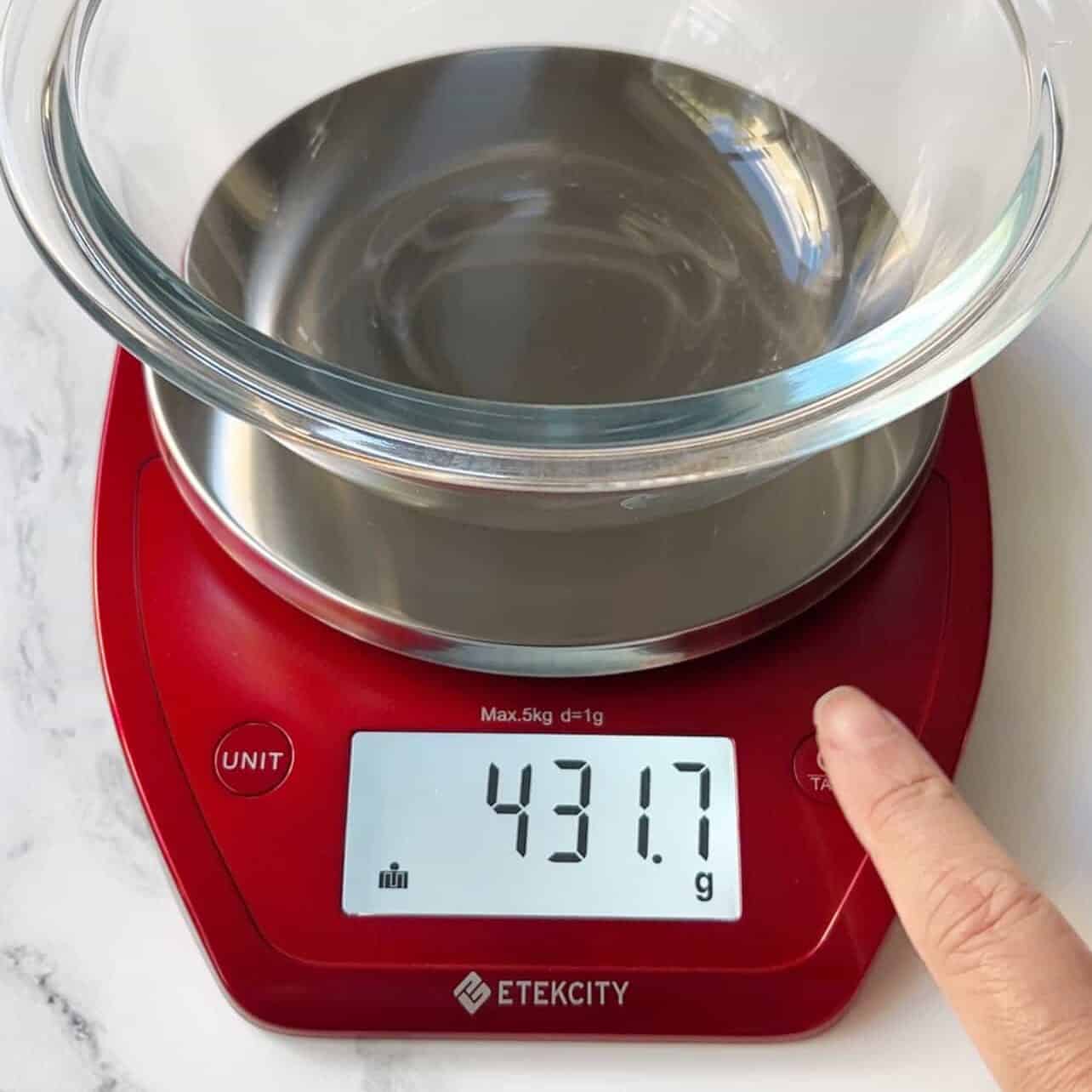
Place any bowl or plate on top the scale. Zero it out but pushing TARE. This will basically set the weight back to zero. So when you add your ingredient to the bowl, it will not count the weight of the bowl or plate.
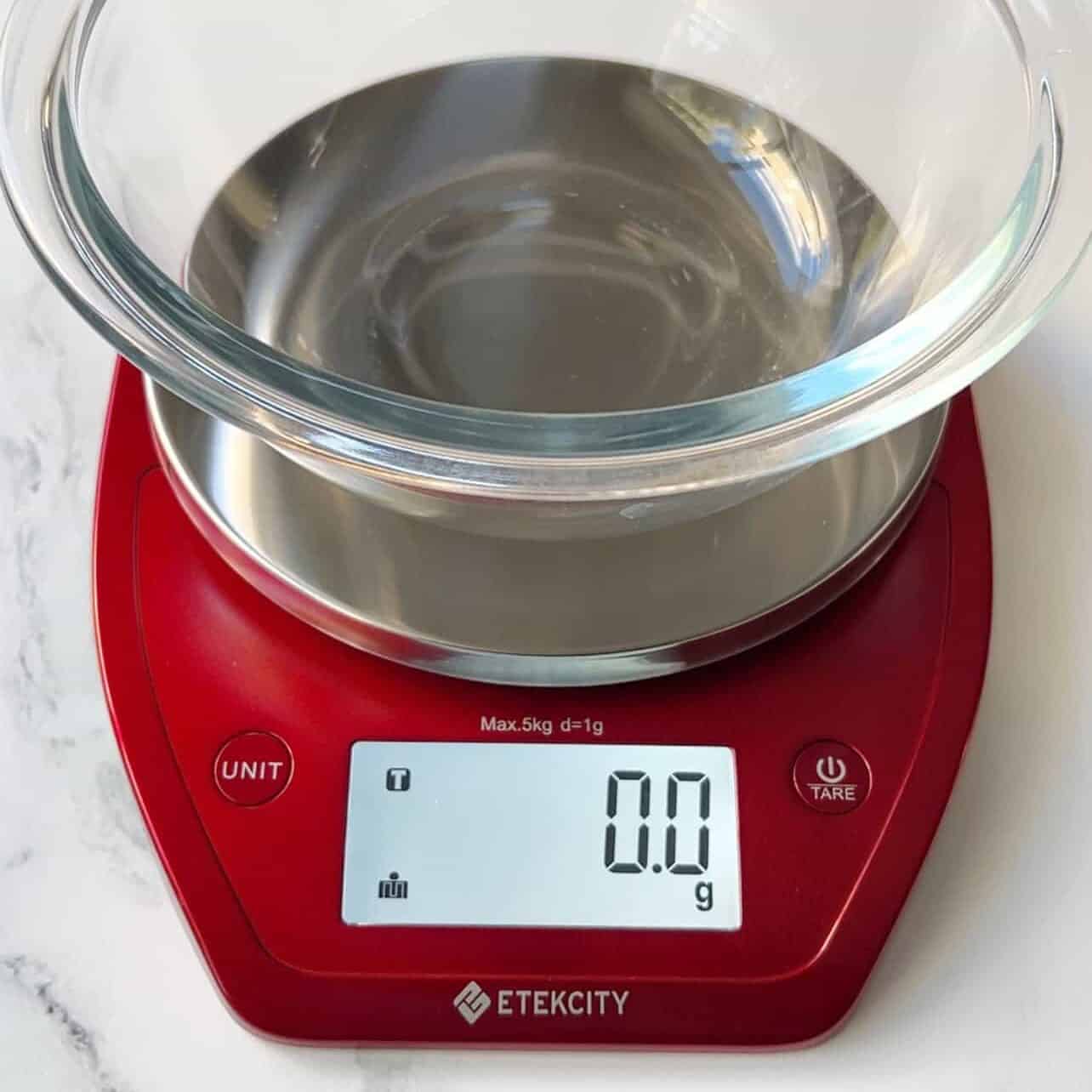
Now you are ready to measure your ingredient.

Add flour or any other ingredient into your bowl. Once you reach your desired weight, press TARE to zero it out again. Then add your next ingredient to your bowl. Add ingredients straight from its original container - flour bag, sugar canister, etc. No need to dirty a measuring cup.
FAQ
If the recipe you're following has grams for your tablespoon or teaspoon, use it! That creator went through the trouble of weighing it out even the smallest measurements. Add the ingredient using your scale and measure the 14 or 5 grams. I'll admit, even I don't do this unless it needs to THAT precise. This is why you will see bread recipes give you all their meaasurements in grams. For the most part, this is what I do consistently for tablespoons and teaspoons: For dry ingredients - stir the ingredient, fill the spoon until it's overflowing, and use a flat utensil (back of a butter-knife) to level off the excess. If you're pouring a liquid into your measuring spoon, fill it all the way to the brim of the spoon before it spills over.
You can search for most common ingredients and their conversions online. Be prepared to see a few different answers - it's kind of mind-boggling! I've added a basic list of ingredients I frequently use converted to weight above in the Measurements I Use section. It includes what I consistently use in grams when a recipe calls for cups with great success. I highly recommend you start your own list, do not worry if it differs from my list! Use what works for you and save it. This way, you can convert any recipe.
This is a very annoying term. It misleads us into thinking we are measuring by weight, when in fact we are still measuring by volume. Not all fluids fill one cup and weigh the same because they can be different density. For example, one cup of water (8oz) will weigh 8oz. But if you were to pour in corn syrup into the same cup, it will register over 11 oz. Why? Because corn syrup is denser than water, so it weighs differently. What's the solution? USE YOUR SCALE.
You Might Also Like...
Equipment
Instructions
- Secure scale on the counter and press the power button on. Press UNIT to select desired unit measurement - grams or ounces. The display should be read ZERO (0).
- Place bowl or plate on top the scale. The weight displayed is purely the weight of the dish. Press TARE to set it to ZERO. What this will do is disregard the weight of the bowl or plate. Now the scale is ready to measure your ingredient..
- Place ingredient into your dishl until you reach the desired weight. If you wish to add and weigh another ingredient into the same dish, press TARE one more time to set it to ZERO. Add your next ingredient and weigh.
Looking for other recipes like this?

Did you make this recipe? Let me know!